
Recently, several prestigious prizes and grants have been awarded to our AI&I members. Learn more about these accomplished individuals and their projects in the article below!
Retirement symposium | Prof. dr. Jan Prins
With the retirement of Professor Jan Prins, Amsterdam UMC celebrates the career of a physician, scientist, and leader whose influence on internal medicine, and infectious diseases in particular, has been profound and enduring. During the retirement symposium, colleagues reflected on a career marked by excellence, integrity, and a rare ability to unite people and disciplines.
According to Professor Joost Wiersinga, internist–infectiologist and long-time colleague, the significance of Prof. Prins for the Department of Internal Medicine and its Division of Infectious Diseases can hardly be overstated. ‘Prof. Prins excelled in all aspects of the academic triad: education and training, research, and patient care. Above all, he always remained a physician, and a truly outstanding and empathetic one.’ Equally characteristic was his approach: beyond politics or diverging scientific opinions, common sense consistently rose above.
At Amsterdam UMC, Prof. Prins played a pivotal role in the successful merger of the Internal Medicine departments of AMC and VUmc, resulting in what is now the largest Department of Internal Medicine in the Netherlands. His impact extended well beyond the hospital walls. In recent years, he took great pride in his role as chair of the Health Council’s Vaccination Committee, advising the Dutch Minister of Health on vaccination policy across the full spectrum of care, an example of science translated directly into societal impact.
Throughout his career, Prof. Prins has been a central figure in shaping infectious disease practice in the Netherlands. For many years, he served as chair of the guideline committee of the Dutch Working Party on Antibiotic Policy (SWAB) and as editor of the national antibiotic handbook. As Prof. Wiersinga notes, ‘If you are admitted to a hospital in the Netherlands today with an infection, there is a good chance your treatment follows a guideline co-shaped by Prof. Prins.’ Internationally, his work has helped define the Netherlands’ strong reputation in antibiotic stewardship.
His influence also reached far beyond the Netherlands. Just recently, Prof. Prins received an award from the International Anal Neoplasia Society (IANS) in recognition of his extraordinary global impact on anal cancer prevention. The multidisciplinary unit he established at Amsterdam UMC became a leading contributor to fundamental research in anal neoplasia, set standards for translating science into clinical practice, and inspired researchers worldwide. In recognition of this legacy, IANS plans to establish a fund in his name to support future research in the field.
Beyond his achievements, colleagues mention Prof. Prins his personality and presence. He is an exceptionally quick thinker, known for sharp, self-made one-liners and disarming humor. Remarks such as ‘You can do nonsensical things in your own time’ or a simple ‘Fasten your seatbelt’ often captured the essence of complex discussions in a single sentence. If someone felt the pace was too fast, Prof. Prins might gently label that an ‘understandable weakness,’ only to add, with a smile, that ‘even a loving mother can’t help you there.’
At his retirement symposium, Prof. Prins left colleagues with a final, thoughtful message. While autonomy, not causing harm, and doing good remain core ethical principles of medicine, he emphasized the growing importance of justice, particularly in ensuring that the Dutch healthcare system remains financially sustainable and fair for future generations.
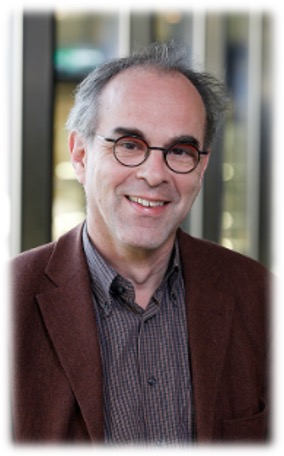 Professor Jan Prins
UvA Fund Start Grant 2025 | Katina Hulme
Seven young scientists from Amsterdam UMC, including Katina Hulme, have received the Start Grant from the UvA Fund’s Spinoza Fund. This support enables them to launch innovative projects and advance their academic careers.
Katina Hulme, postdoctoral researcher and member of the Amsterdam Institute for Immunology and Infectious Diseases AI&I, investigates whether influenza infection can trigger overactive immune cells, leading to pancreatic inflammation, damage to insulin-producing cells, and ultimately type 1 diabetes (T1DM). Her project was nominated by the AI&I board for its excellence and potential impact: ‘Her research on the link between diabetes and influenza is innovative and highly relevant for both endocrine and respiratory medicine.’
If successful, her work could provide the first evidence for a causal link between influenza and T1DM, opening doors to prevention through vaccination and new therapeutic targets.

Photo credit: Joyce van Doorn
The UvA Fund Start Grant supports promising young medical researchers at Amsterdam UMC who received their PhD less than five years ago. The next application round is in spring 2026.
AIDS Fonds & Sidaction grant | Prof. Neeltje Kootstra and Dr. Alexander Pasternak
Two AI&I researchers, Dr. Alexander Pasternak (LEV) and Prof. Neeltje Kootstra (EXIM), are part of a multinational research team awarded a €600,000 research grant from the Dutch AIDS Fonds and Sidaction (France). The team also includes Eugenia Basyuk (University of Bordeaux), Edouard Bertrand and Ovidiu Radulescu (University of Montpellier), and Thomas d’Aquin Toni (Fondation Mondiale Recherche et Prévention SIDA, Ivory Coast).
HIV latency remains a major barrier to a cure, as latent proviruses in CD4+ T cells evade the immune system and can reactivate, causing viral rebound. Current strategies to control the latent reservoir are limited by the unpredictable and variable transcriptional activity of these proviruses. This project aims to unravel the molecular mechanisms behind HIV transcriptional bursting in T lymphocytes and its impact on reservoir dynamics and diseases progression in people with HIV-1 and HIV-2.
By combining advanced techniques such as transcription imaging and single-molecule DNA footprinting, the team will compare HIV-1 and HIV-2 to identify key features of viral transcription that influence reservoir control. Insights from this research may inform new strategies to reduce the viral reservoir and achieve long-term virus control, potentially paving the way for an HIV cure. Mathematical modeling will link transcriptional bursting to reservoir dynamics, enabling predictions of clinical outcomes and supporting the development of personalized treatment strategies.
This interdisciplinary project has the potential to open new avenues for therapeutic intervention and improve reservoir control in people living with HIV.
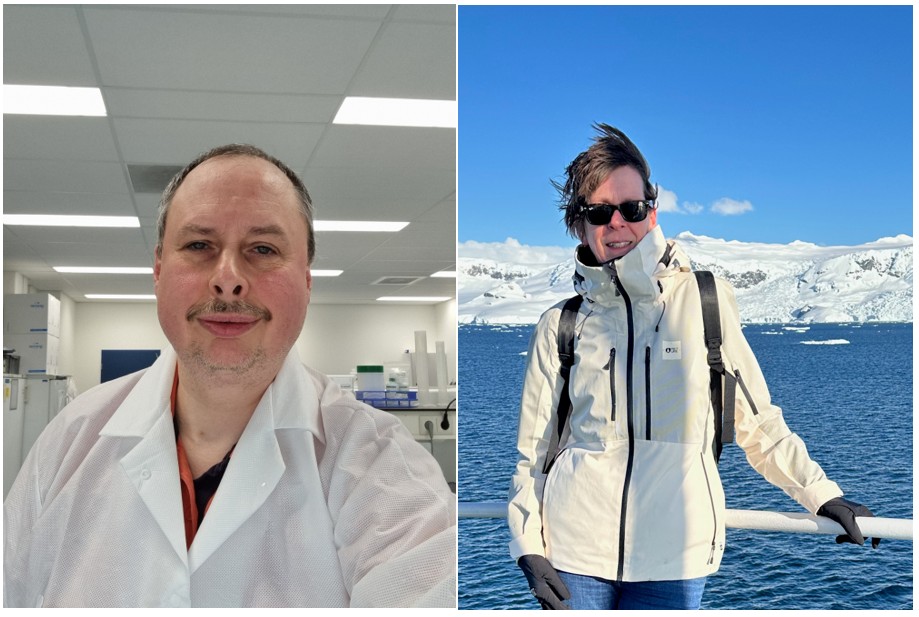 Left: Dr. Alexander Pasternak, Right: Prof. Neeltje Kootstra