


About the Netherlands Autism Register
The Netherlands Autism Register (NAR) was established in 2013 by the Dutch Autism Association (NVA) and Vrije Universiteit Amsterdam (VU). This longitudinal study follows approximately 3,500 autistic people, collecting annual data on topics including health, well-being, education, employment and housing. This provides insight into diverse life trajectories and factors associated with quality of life.
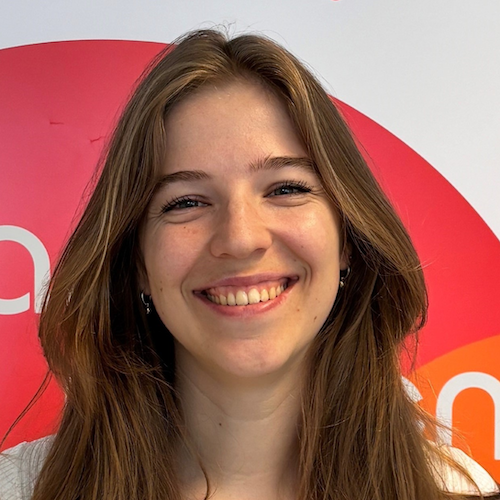
Participants also help shape the research and contribute to developing and evaluating interventions. Several NAR panels provide input on research plans and questionnaires, and autistic people also work within the research team. As Kirsten Spaargaren, a PhD candidate at NAR and Vrije Universiteit Amsterdam, puts it: “Autistic people are not just participants in our research, but co-researchers.”
Adapting an existing sleep intervention
I-Sleep, an existing five-week online sleep intervention based on cognitive behavioural therapy for insomnia (CBT-I), was adapted in collaboration with seven autistic adults who experienced sleep problems themselves. Through several rounds of written feedback and online group discussions, they assessed the intervention’s content, language, usability and relevance to their experiences. Their input led to more concrete, autism-specific examples, clearer instructions and greater attention to topics such as light, daytime relaxation and bedtime routines. Instructions were phrased to offer more explanation and be less prescriptive. The core components of cognitive behavioural therapy were retained.
Panel members also shared their experiences and preferences during the training of the sleep coaches, who supported participants with weekly written feedback on completed modules. This gave the principle of “nothing about us without us” a practical role in the research process. People with lived experience helped determine how the intervention was delivered, while researchers ensured that it remained consistent with the treatment principles.
Evaluating the intervention
Following its adaptation, i-Sleep was evaluated in a randomised controlled trial (RCT) involving 163 adults from NAR. After six weeks, insomnia symptoms had decreased more in the intervention group than in the waitlist control group. A clinically meaningful improvement was observed in 37.8% of the intervention group, compared with 11.1% of the control group. Quality of life also improved more in the intervention group. No significant differences were found in anxiety, depression or daily functioning.
At six months, the improvement in insomnia symptoms was still evident within the intervention group. By then, a comparison with an untreated control group was no longer possible, as the waitlist group had also received access to the programme.
The results also highlight room for improvement. Half of the intervention group completed all five modules. Further research is needed to establish which participants benefit and what adaptations or additional support are needed for those who drop out or do not benefit sufficiently.
Implications for cohort research
The i-Sleep Autism project shows how a cohort can provide a foundation for both developing and evaluating interventions. Participants contribute more than data: they also help determine which questions are investigated and how treatment is designed. For Spaargaren, this starts with understanding autistic people’s daily lives. She notes that the focus is often still on what someone cannot do or how they should adapt, even though the environment can change too. Support should also allow people to remain themselves. This principle is reflected in another NAR project, which focuses on forming and maintaining friendships. Spaargaren asks: “How can you find that social connection while staying true to yourself?” The same question remains central throughout: what does someone need to lead a good life?
Start small
Participatory research can seem time-consuming and complicated. Spaargaren’s advice to researchers who feel daunted by it is to start small. For example, invite one person with lived experience to contribute to your research question or choice of outcome measures, or to review research materials and participant information letters. From there, you can build the collaboration. “My advice is: try to give the people your research is about a voice.” This helps research better reflect people’s own needs and the outcomes that matter to them.
More information
Read more about iSleep Autisme (in Dutch)