

The Dutch Heart Foundation has awarded Dekker grants to two ACS researchers. Biomedical researcher Jessie van Wezenbeek will collaborate with heart failure cardiologist Joëlle Elias from the UMC Utrecht. Biomedical engineer Bettine van Willigen will work together with cardiology resident Fabienne Vervaat from Catharina Hospital.
Jessie van Wezenbeek & Joëlle Elias
With this project Van Wezenbeek and Elias focuses on right ventricular failure after implantation of a left ventricular assist device (LVAD) and the role of inflammation in the ARISE study. Read more about the study below.


ARISE study
Heart failure after LVAD implantation
Right heart failure is a serious complication after LVAD, affecting up to 30–40% of patients. This condition leads to multi-organ dysfunction, longer recovery times, and increased mortality. Recent research highlights that a pre-existing pro-inflammatory state may increase the risk of right heart failure. However, the relationship between inflammation, right ventricular function, and postoperative deterioration is not yet fully understood.
ARISE Study Launched
The ARISE study, led by Joëlle Elias (UMC Utrecht) and Jessie van Wezenbeek (Amsterdam UMC), will combine detailed right ventricular assessments with perioperative inflammatory profiling. The goal is to uncover the mechanisms behind right heart failure and improve early risk prediction, with special attention to differences between males and females.
Innovative Strategies Tested
With this collaboration Elias and Van Wezenbeek will also evaluate new approaches to modulate inflammation and reduce right heart failure rates. Insights from ARISE will benefit not only LVAD patients but also others at risk for right heart failure, aiming to help patients achieve more years of healthy life.
Bettine van Willigen and Fabienne Vervaat
With their project Van Willigen and Vervaat Willigen are working together on a new, rapid
technique to detect problems in the smallest blood vessels of the heart. Read more about their project below.
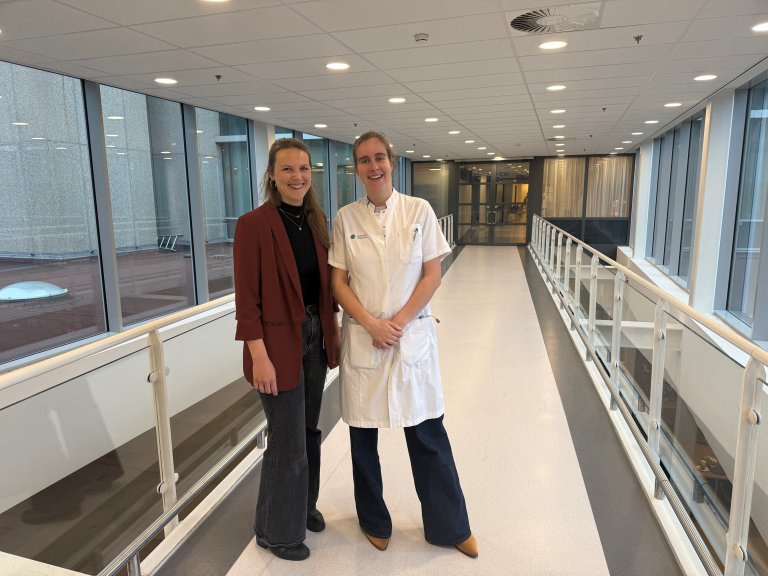
Detect problems in the smallest blood vessels of the heart faster
Current Diagnostic Challenges
Chest pain is often linked to narrowed coronary arteries. However, some patients - especially women - experience chest pain without these blockages. The problem may lie in the tiny capillaries, which are difficult to examine. Current methods, like heart catheterization, are invasive and risky, leaving many patients undiagnosed and anxious.
New, Easier Technique
van Willigen en Vervaat plan to analyze existing CT scans from patients who have already undergone special measurements during catheterization. By using mathematical models, they hope to assess capillary health directly from CT images. This could lead to faster, less burdensome diagnoses for patients.
The Team Science grant aims to bring together two talented young researchers
with different but complementary areas of expertise. Read more about the grant
and the awarded project here.