


Key Mechanism Identified
The CALERIE study is the first long-term intervention trial of calorie restriction in humans. It shows that two years of moderate calorie reduction led to higher levels of the hormone adiponectin and lower levels of ceramides, fat-like molecules in the blood associated with insulin resistance and an increased risk of type 2 diabetes. “This is the first time we’ve been able to show in a controlled human study that the adiponectin–ceramide pathway is an important driver of the metabolic benefits of calorie restriction,” says Moritz Warmbrunn, researcher at Amsterdam UMC (Amsterdam Cardiovascular Sciences). “We are essentially seeing in humans what has long been observed in mice.” The reduction in these harmful fat molecules was found to be partly responsible for improved insulin sensitivity and better regulation of blood glucose levels.
Adaptation Over Time
The study also shows that the metabolic effects of calorie restriction are most pronounced after twelve months and then partially diminish, suggesting that the body adapts over time to a lower energy intake. “Initially, the body seems to respond very strongly to calorie restriction, but over the longer term it finds a new balance,” says Warmbrunn. “This adaptive response is fascinating from a biological perspective and important to consider when we think about long-term lifestyle interventions.”
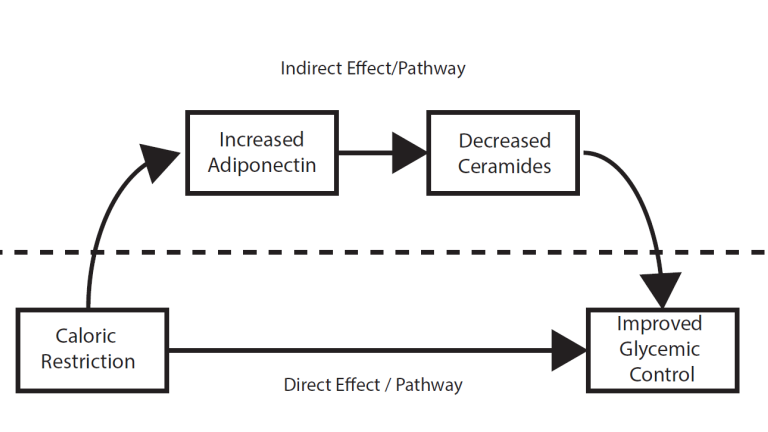
Adiponectin–ceramide pathway as an important driver of the metabolic benefits of calorie restriction
New Avenues for Treatment
These insights open up new perspectives for treatments aimed at improving metabolic health and reducing the risk of type 2 diabetes. “Our goal is not to have everyone count calories for years,” notes Warmbrunn. “We want to understand the underlying biology well enough to develop therapies that mimic the benefits of calorie restriction – so that people can gain metabolic advantages without having to drastically reduce their food intake.” By revealing how calorie restriction improves sugar metabolism through the adiponectin–ceramide pathway in humans, this study marks an important step towards targeted strategies to prevent and treat metabolic diseases.
The findings were published in Nature Communications. The CALERIE study was funded by the KNAW ter Meulen fonds.