

In the lead-up to her PhD defence on Thursday, April 23, 2026, we are pleased to share an interview with Wendy Geuverink on our website about her research into how people from different religious and philosophical perspectives think about altering embryo DNA. The interview was produced on behalf of The DNA Dialogues and published in DNA, the staff magazine of Amsterdam UMC.
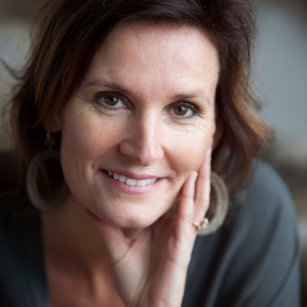
“Everyone is entitled to have an opinion about tinkering with DNA.”
How do people’s religious or philosophical beliefs shape the way they think about altering embryo DNA? That question lies at the heart of the PhD research of Wendy Geuverink, who will defend her dissertation at Amsterdam UMC (VU) on 23 April. Her research is part of The DNA Dialogues, a project in which this topic is discussed with many different groups. Geuverink’s work shows how people carefully weigh different considerations when reflecting on this issue.
The cover of her dissertation features a colourful painting made by her aunt: a woman lovingly holding a nest with three eggs. Her aunt died at the age of 45 from metastatic breast cancer. Only later did it become clear that her risk of breast cancer had been hereditary. “When my aunt died, we did not yet know about the existence of the breast cancer gene. Now we do. I have since learned that I am also a carrier of this gene myself.”
With the help of CRISPR-Cas, it is possible to very precisely cut out or replace pieces of DNA in an embryo and, in theory, prevent hereditary diseases. But how do people in the Netherlands view this technology? For her dissertation, Geuverink spoke with people with hereditary conditions, Christian faith leaders, and religious midwives: people who may one day face this decision themselves, who reflect on the moral questions involved, or who may in the future speak with parents who have to make this choice.
From “I don’t know” to an opinion
“Everyone is entitled to have an opinion about tinkering with DNA, and I am especially interested in how people arrive at their views,” says Geuverink. “People often form their opinion during the conversation itself. They may first say, for example, ‘I have no idea.’ And five minutes later: ‘My gut feeling says we should not go down this path.’” In these conversations, broader questions almost always emerged: when does life begin? Can suffering also have meaning? What kind of world do we want to live in? By exploring such questions out loud, people begin to see more clearly what matters to them, the researcher observes.
In her interviews, Geuverink found that people weigh different values against one another, values that are all important to them, and that they do so on several levels. On a personal level, the issue revolves around illness and personal experiences: family members or one’s own situation, and the prevention of suffering. On a societal level, the question shifts: “Will you still be allowed to exist in the future if you have a condition that could have been prevented?” On a third level, it concerns how we view life itself. “What does it do to us if we start to see life as something so malleable?” says Geuverink.
Malleability and expectations
The malleability of life and the pursuit of perfection came up in almost every conversation. Concerns about this stand in sharp contrast to the belief in progress that is often seen among “tech bros” in Silicon Valley. “The motto there is: ‘what is possible?’ rather than ‘what is right or wrong?’ But once this technology exists, not choosing also becomes a choice,” says Geuverink. Possibilities become expectations. “Are you obliged to prevent something if you can? And what does it mean if you choose not to?”
One study participant who is herself a carrier of a hereditary disease put it this way: “To be honest, I am afraid of this malleable human being, that we will create a world in which everyone is the same and that there will then be even less room, I think, for people who are different.” Some of the religious midwives experienced that new technologies can create tension between their professional role and their personal values. That can be a real challenge: supporting prospective parents in making their choice, even when that choice conflicts with their own values.
Sitting on God’s throne or a gift from heaven?
Christian perspectives turned out to be less uniform than is often assumed. “The idea that there is one single Christian view is simply not true. There is, in fact, a great deal of diversity.” Some Christian leaders see altering DNA as something humans should not venture into. “Then the question becomes: are we trying to sit on God’s throne?” At the same time, there are also leaders who interpret technology differently. “Perhaps this is actually something we have been given in order to reduce suffering.”
More than a yes or no
According to Geuverink, it is important to conduct research in a way that suits such a new and sensitive topic. “People are often asked: do you find it acceptable, yes or no? But that actually tells you very little.” In her view, weighing and considering does not stem from a lack of knowledge, but from placing different values side by side. “You do not capture that richness in a survey question on a scale from one to five.”