
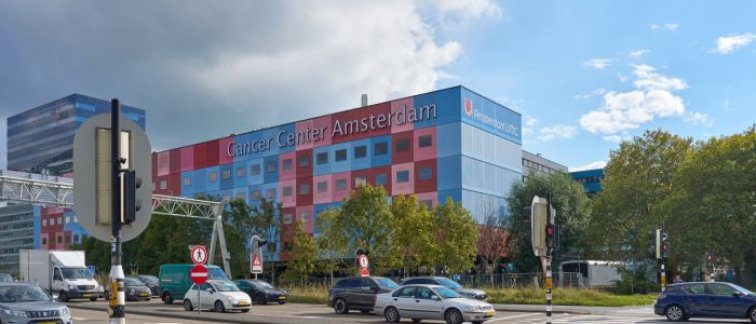
The old home of Amsterdam UMC – Cancer Center Amsterdam, the striking red-and-blue “block box” along the A10, will disappear from the skyline. With the opening of the Research & Diagnostiek Centrum Adore (RDC Adore) on Van der Boechorststraat, the CCA building gradually lost its function and has stood empty since autumn 2024. Dismantling work started today and is expected to continue until the end of 2026.
Cancer Center Amsterdam was officially opened on 19 June 2006. For nearly two decades, physicians and researchers at Amsterdam UMC conducted pioneering research there into new cancer treatments. It grew into an internationally leading center where, among other things, several forms of immunotherapy were developed, including a cancer vaccine.
From CCA to Research and Diagnostiek Centrum Adore
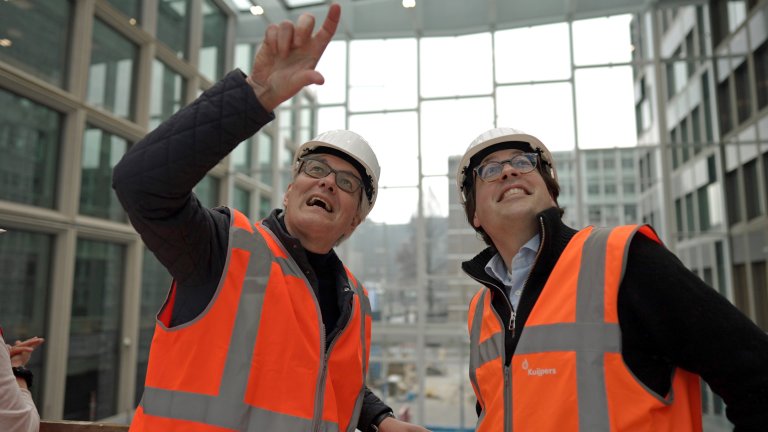
Today, almost all cancer research takes place in the bigger and high-end RDC Adore. Adore is Amsterdam UMC’s groundbreaking initiative to bring together top cancer researchers and neuroscientists from the Netherlands and abroad to tackle the biggest questions in cancer and brain disease. In this state-of-the-art building, around 300 physicians, researchers and other professionals work side by side every day, sharing knowledge and using the same advanced research facilities.
Oncological surgeon and chair of the executive board of Cancer Center Amsterdam, Geert Kazemier: “Just as CCA initiator Bob Pinedo once said: put all cancer researchers together, I thought: why don’t we do the same for cancer and neuroscience researchers? That’s how Adore came about. We share labs and equipment there, but we also meet each other at the coffee machine, exchanging ideas. That’s where the best ideas are born.”
A breeding ground for leading cancer research
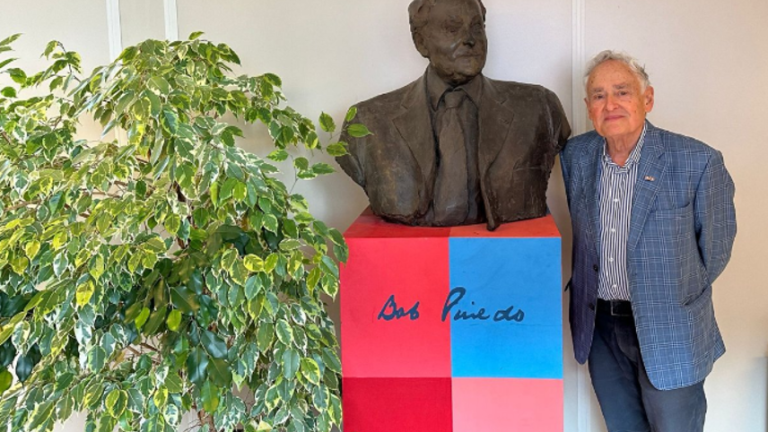
The ‘block box’ ('blokkendoos') of Cancer Center Amsterdam, as the eye-catching building along the A10 is popularly known, was only supposed to be there for five years. That was a deliberate choice: a modular building could be realized much faster than a traditional new-build, which would easily take ten years or more. It was created at the initiative of now 82‑year‑old Bob Pinedo, who was appointed professor of oncology with his own department at the then VUmc in 1979. In 2003, he set his sights on building an oncological research laboratory where all medical disciplines would come together to study cancer and develop new treatments.
Fundraising campaign with Mies Bouwman and Ivo Niehe
To finance the most advanced medical equipment, Pinedo launched a nationwide fundraising campaign. The campaign culminated in a televised event from Ahoy, presented by the famous Dutch TV hosts Mies Bouwman and Ivo Niehe. This campaign, too, raised tens of millions of euros for cancer research.
“The CCA building is going is only a logical step,” says Pinedo. “It has done its job. It had also become far too small for all the researchers who joined over the years. Fortunately, we now have a beautiful new building with enough space to continue this vital research.”
Sustainable dismantling and circular reuse
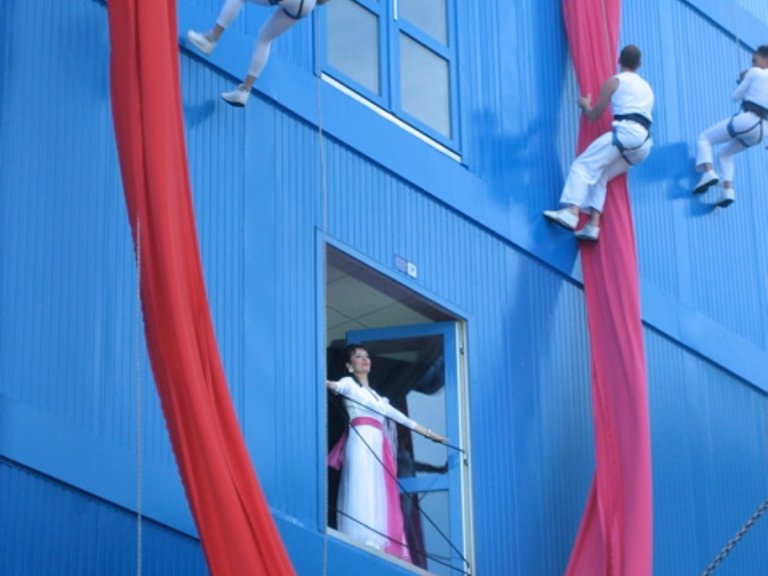
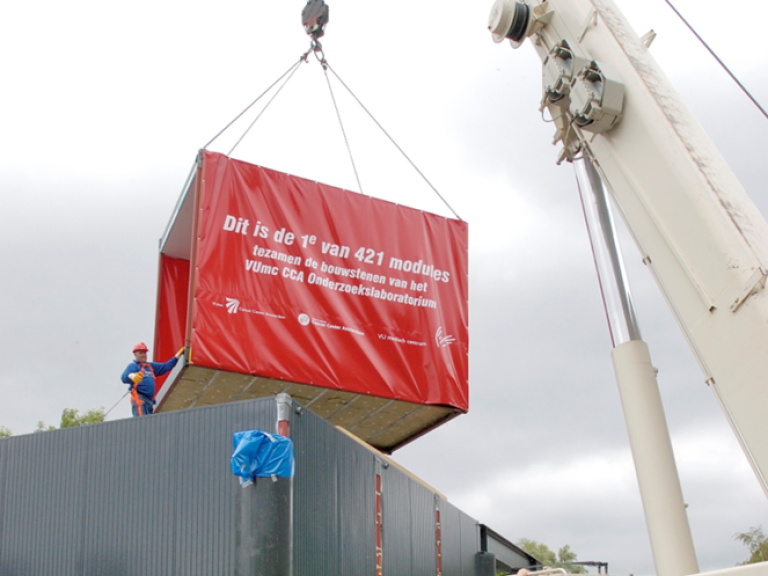
The former CCA building, located right next to the outpatient clinic, consists of 421 separate units. Over the coming period, these units will be lowered one by one and stripped in a circular way. All materials will be separated by waste stream and reused or processed into basic raw materials. For example, old glass will be turned into new glass. Around two hundred units will remain intact; they will be refurbished and repurposed for asylum seeker centers in the Netherlands and abroad.
The building stands above a canal on a total of 84 piles. Once all units have been removed, these piles will be sawn off at ground level.
Future use: Zuidasdok
From next year, the municipality will make the site available to the Zuidasdok project. A temporary road will be constructed there, including an on- and off-ramp for the A10. This road is intended for construction traffic. When the Zuidasdok activities have been completed, the construction road will be removed and the land will be reseeded.