
PhD candidate Flavia Runello from the Department of Pathology at Amsterdam UMC received a Cancer Center Amsterdam (CCA) travel grant to visit the laboratory of Professor John Doorbar at the University of Cambridge. Below, she shares her personal experience and research outcomes from this visit
This year I had the privilege of visiting the laboratory of Prof. John Doorbar at the University of Cambridge, thanks to the Cancer Center Amsterdam’s travel grant. This visit allowed me to conduct valuable research on Human Papillomavirus (HPV)-driven carcinogenesis and integrate a virology prospective into my translational biomarker-oriented research. As a PhD student in the Department of Pathology, my research focuses on HPV-induced precancerous lesions, and their biological and molecular characterization.
Research and study outcomes
In February and March I carried out research at the laboratory of Prof. John Doorbar, which is internationally recognized for its work on HPV biology. Here I studied viral gene expression patterns and viral life cycle biomarkers in a unique cohort of patients from our ongoing study on multizonal HPV-associated lesions. The aim of this study is to investigate whether anatomically distinct lesions within patients share common viral patterns and molecular profiles, to improve our understanding of the natural history of HPV infection, and identify biomarkers that may improve patient risk stratification.
To do this, I received intensive hands-on training in the application of RNAscope for HPV transcript detection, a spatial genomics technique that allows sensitive detection of RNA transcripts within intact cells. This included optimization of tissue preparation, assay and imaging protocols, as well as troubleshooting technical challenges. I was also trained in a number of complementary immunofluorescent staining on tissues, aimed at detecting HPV proteins representative of the viral life cycle.
Our findings suggest that, while high-grade lesions are characterized by elevated viral oncogene expression and clinically severe features, viral productivity is still retained and may facilitate viral spread across anatomical sites. This pattern is reminiscent of what is observed in HPV-positive patients living with HIV, pointing towards a possible deregulation of immune control and viral restriction mechanisms, and opening new directions for further research.
Life in Cambridge
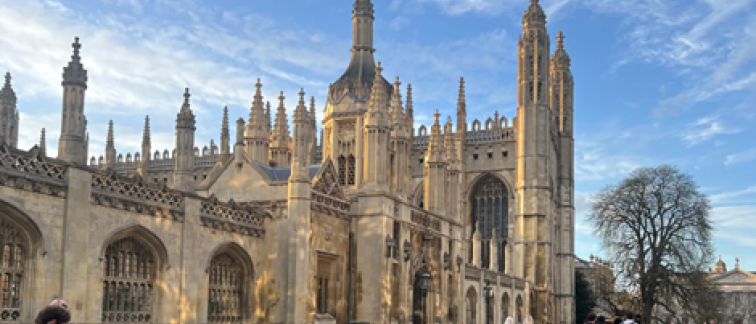
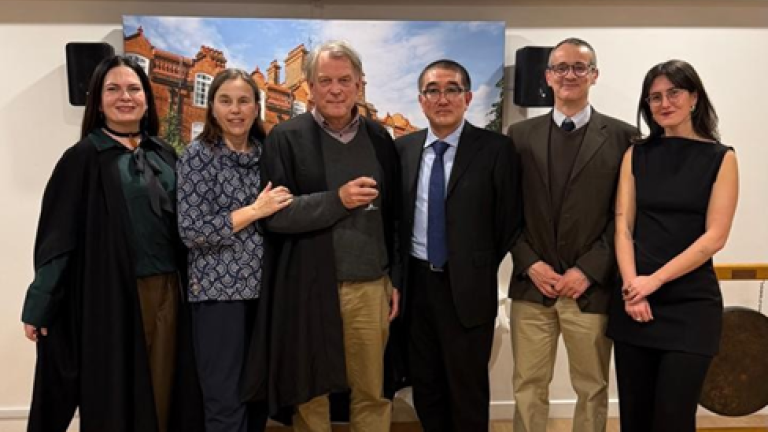
During my stay in Cambridge, I experienced a lively academic environment where research and student life are closely connected. The collegiate system added to this by bringing together people from different disciplines, making it easy to have informal discussions beyond the lab. A highlight was attending a Formal Hall dinner at Hughes Hall College, which offered a relaxed and enjoyable way to meet other researchers and experience a traditional part of college life.
Acknowledgements
I gratefully acknowledge everyone in the Doorbar lab, and the CCA funding support that made this visit possible, which played an important role in advancing both my technical training and ongoing research.
.