

For Postdoc Appreciation Week 2026 (PAW_NL), we highlight Cansu Alözkan Sever, a postdoctoral researcher at Amsterdam Public Health (APH), working at the Department of Clinical, Neuro and Developmental Psychology, Vrije Universiteit Amsterdam (VU). Her story shows how she leverages academic research to strengthen fieldwork and improve mental health support for refugees.
From fieldwork to scalable interventions
Cansu was trained as a clinical psychologist in Turkey, where her early career coincided with the Syrian war and a massive influx of refugees: “Turkey was the hub for refugees, the problems with the number of staff versus the mental health needs of the people were never-ending.” She moved into the field, working with NGOs in program development and Mental Health and Psychosocial Support.
Confronted with needs that far exceeded the available care, she began to look for other ways to reach people: “The things I saw on the field and the needs were the main reason that forced me to do a PhD. The available care was never enough for that many people, so there needed to be different methods, different ways to reach all these people.”
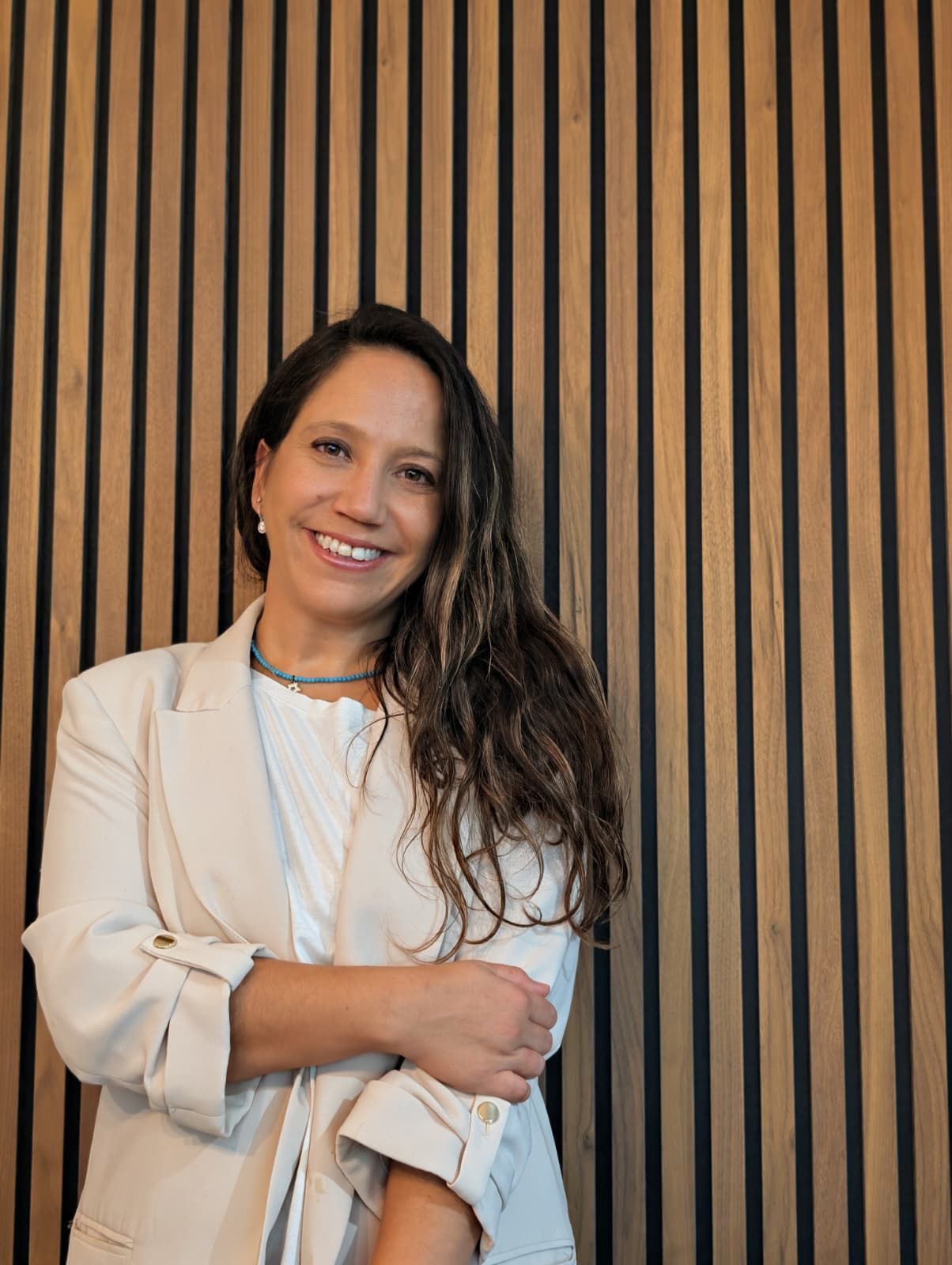
Scalable interventions turned out to be a promising solution. At VU, she started her PhD in the REMAIN project, evaluating a scalable intervention for refugee youth in the Netherlands. Now, as a postdoc, she works on several implementation studies in different contexts and countries: “My research focuses on developing, evaluating and doing implementation research on scalable interventions among different populations, cultures and contexts.”
Collaboration is key
Working with refugees and migrants across cultures makes collaboration central to her work:
“We can’t do it only by ourselves. We work with non-governmental organizations, municipalities, and other universities around the globe.” As she puts it, being “a little bit introverted” can make it harder to put yourself upfront, but supported by open, collaborative supervisors she learned how to actively build partnerships, not just sit at your table, but go out and meet new people, looking from different angles.
Selfcare
The shift from PhD to postdoc, for Cansu, is mainly about juggling more projects. As a mother of two, time management and boundaries are crucial: “As a postdoc I’m on several projects, so you have several different tasks. I try to teach myself to limit myself sometimes, for example that I have to leave at 5:30 latest. I find that kind of a self-care part of my life.”
Real-world impact
What motivates Cansu most is seeing real-world impact: “The fact that I can see it’s not only numbers or statistics, that I can see the effect of what I’m doing is motivating me. Even though I’m not a clinical practitioner anymore here, I’m still in touch with mental health and psychosocial support for people who are in need.”
Cansu is also excited about how the scalable psychological interventions she works on have evolved over the years, and about the considerable potential of digital technologies and AI to make evidence-based mental health support more accessible. At the same time, she recognizes the uncertainty of the postdoc phase: “There is of course no certainty of what will happen next, but I want to continue with academia, I want to continue with research.”
Her main advice to PhD candidates and postdocs is to trust their own trajectory: “We shouldn’t compare our academic journeys and paths to others. You can start your academic journey at a different point and you still have time.”
Fun fact
Coffee over tea - Despite coming from Turkey, where tea is a major part of the culture, Cansu has no doubt about her preference: “Coffee, definitely. I can’t work without coffee.”