


Over the course of life, the female brain can undergo three major hormonal transitions: puberty, pregnancy, and menopause. For the first time, researchers from the Pregnancy Brain Lab at Amsterdam UMC investigated whether these three transitions leave similar or distinct traces in the brain, using identical methods. Their study was published today in Nature.
PhD candidate Sophie van 't Hof and colleagues used repeated MRI scans from more than a thousand women in three groups. These groups are girls around puberty, women before and after pregnancy, and women before and after menopause. In each group, brain changes were compared to a stable control group in the same life stage, to isolate what was genuinely linked to the hormonal transition itself.
Patterns
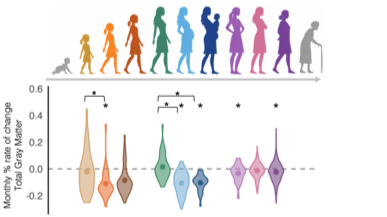
During puberty and pregnancy, gray matter in the cerebral cortex decreased extensively. This showed for both life stages to a similar degree and partly in the same regions, especially regions important for higher-order cognitive functions. Yet the two were not identical: in more than half of the examined regions, they showed a different pattern.
However, menopause showed a completely different picture. The researchers found that women transitioning from before to after menopause did not show a faster decline in gray matter than women who were stable before or after menopause. This suggests a temporary pause in the gradual decline typical for this age.
Future research
Female-specific brain changes have so far been strongly underrepresented in brain research, and until now no longitudinal, whole-brain study of menopause existed. Because this study is the first to directly compare all three transitions within a single framework, it provides a basis for further research into brain health around these three hormonal transition points.