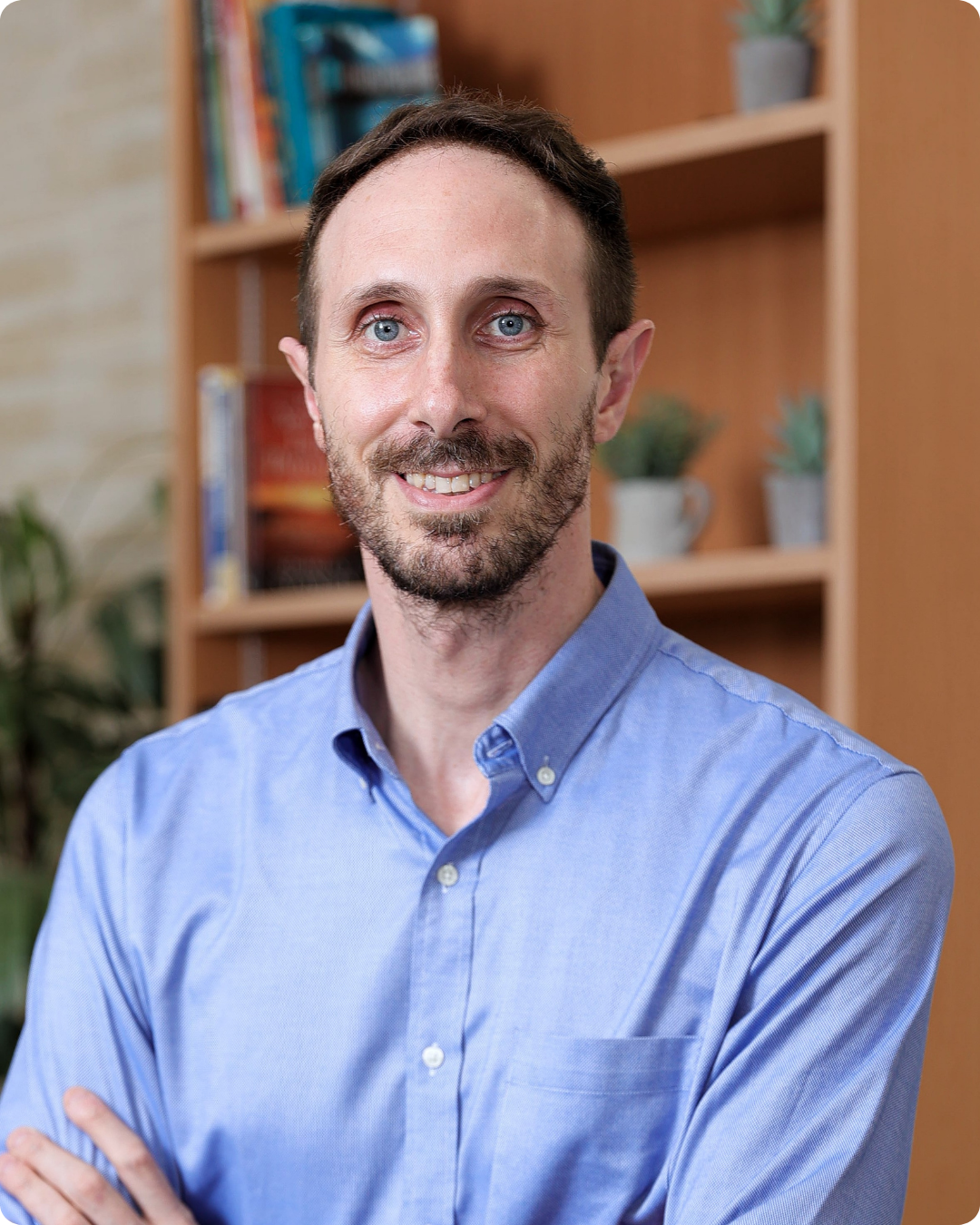
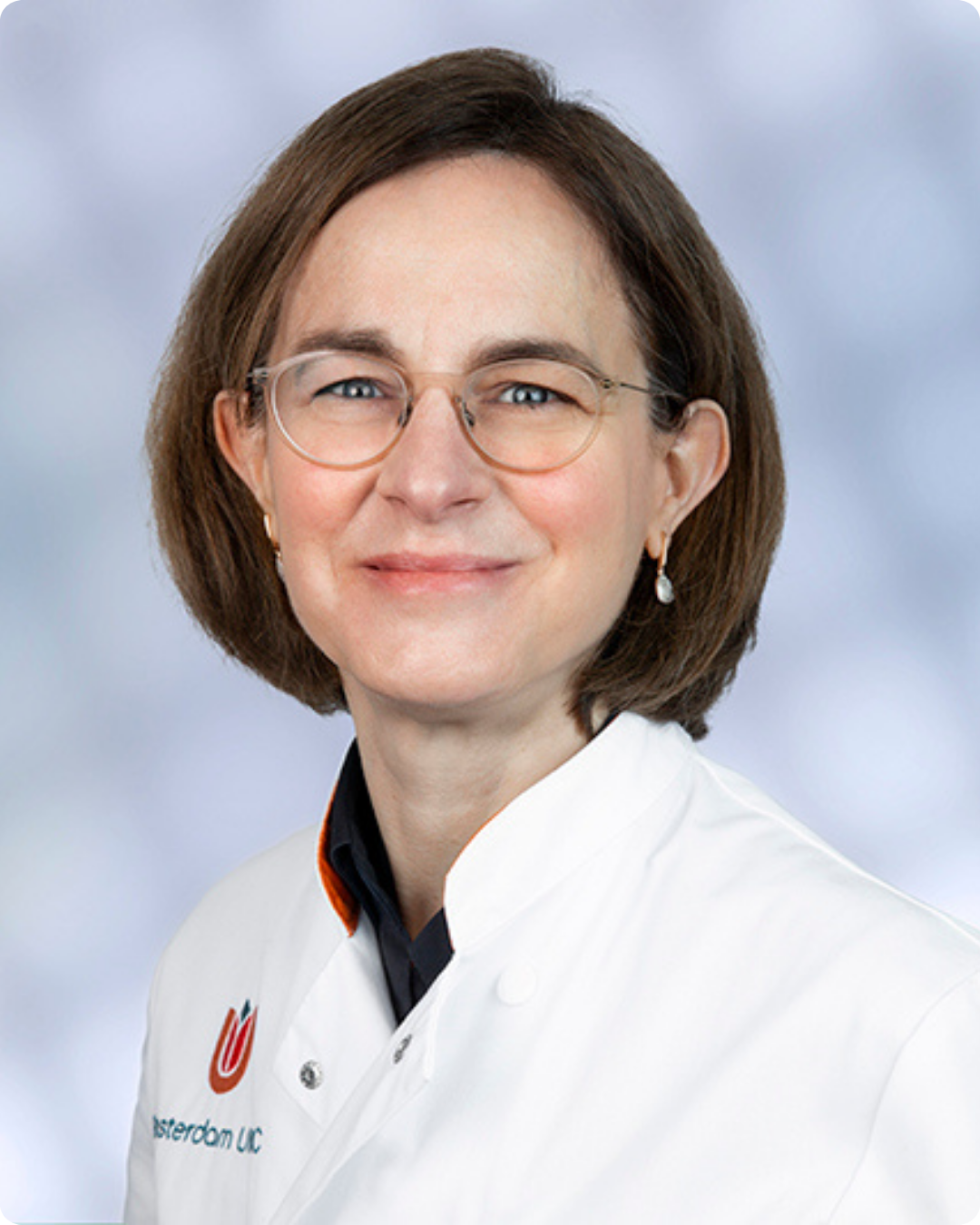
In Dutch academia, Principal Investigators (PIs) are expected to take on leadership roles, establish independent research lines, and build their visibility. Our PIs demonstrate scientific vision, build strong research teams, and mentor the next generation of talented researchers. They secure funding to drive discoveries and advance new treatments in the field of neuroscience.
Amsterdam Neuroscience proudly congratulates the newly appointed PIs of 2026. Recently appointed by Amsterdam UMC in the Pediatric Neurology, Neurology, Psychiatry, Anatomy and Neuroscience, Medical Biochemistry, Biomedical Engineering and Physics and Pediatrics departments, these eleven Amsterdam Neuroscience PIs will conduct their research across five of the nine different research programs.
Truus Abbink
Department: Pediatric Neurology
Research Program: Cellular & Molecular Mechanisms
Truus Abbink is an Assistant Professor specialized in molecular biology with a focus on translational control in the brain. Her research aims to unravel the molecular mechanisms underlying leukodystrophies, with particular emphasis onvanishing white matter (VWM). Using disease models and patient-derived material, Abbink has demonstrated that dysregulation of the integrated stress response (ISR) is a key driver of pathology. These insights underpin preclinical studies and a clinical trial, demonstrating her commitment to connecting fundamental mechanisms with diagnostics and therapeutic strategies. In the coming years, she will expand her research on dysregulated stress pathways and translational control in other leukodystrophies.
Matthan Caan
Department: Biomedical Engineering and Physics
Research Program: Brain Imaging
Matthan Caan works as an Assistant Professor in Biomedical Engineering and Physics and is one of the program leaders of the Brain Imaging Research Program at Amsterdam Neuroscience. His research focuses on artificial intelligence for quantifying MRI in reconstruction and statistical analysis.He works ondeep learning for image reconstruction, and machine learning for predicting treatment outcomes.
Vanessa Donega Marques
Department: Anatomy and Neuroscience
Research Program: Cellular & Molecular Mechanisms & Neurodegeneration
Vanessa Donega is an Assistant Professor at the department of Anatomy and Neuroscience, where she works together with her team on the regenerative potential of the aged and diseased human brain. They investigate the mechanisms that promote or impair regeneration of the human brain and assess the capacity of neural stem cells to produce functional neurons to restore brain function. This knowledge is key to our work towards the development of tailor-made stem cell-based therapeutic strategies for brain regeneration. Currently, Donega and team focus on Parkinson’s disease and combine post-mortem human brain tissue, brain organoid models and PD mouse models, in combination with state-of-the-art methods, including (single-cell) omics and high-end microscopy.
Willem de Haan
Department: Neurology
Research Program: Neurodegeneration
Willem de Haan is a cognitive neurologist and senior researcher at the Alzheimer Center Amsterdam. The aim of his research is to better understand the relation between brain network activity and dementia. For this, he has focused on developing and applyingadvanced analysis techniques to study neurophysiological (EEG/MEG) data. This includes computational brain network modeling to integrate fundamental pathophysiological insights with larger-scale neuronal network failure, describe Alzheimer’s disease damage mechanisms, and predict the effect of activity-targeting interventions. To validate model predictions and work towards new personalized treatment options, non-invasive brain stimulation studies are currently ongoing (tES and TMS). As head of the EEGlab he also provides consultancy and analysis for the use of EEG as treatment monitoring tool in pharmaceutical trials.
Leonie Menke
Department: Pediatrics
Research Program: Cellular & Molecular Mechanisms & Complex Trait Genetics
Leonie Menke is a pediatrician and an Assistant Professor at the Emma Center for Personalized Medicine with a focus on therapy development for genetic disorders.Her work is embedded both within Amsterdam Neuroscience and Amsterdam Reproduction & Development. Since 2022 she has been president of the national board of the Developmental and Genetic Pediatricians, and deputy head of the Developmental and Genetic Pediatrics fellowship training.Menke’s research lines focus on growth and constructing syndrome-specific growth charts for various syndromes, discovering and unraveling new syndromes (such as the Menke-Hennekam phenotypes), and finding new therapeutic strategies for rare genetic disorders.
Rogier Min
Department: Pediatric Neurology
Research Program: Cellular & Molecular Mechanisms
Rogier Min works as an Assistant Professor at the Amsterdam Leukodystrophy Center and the Department of Integrative Neurophysiology (CNCR, Vrije Universiteit). His research focuses on the cellular and molecular mechanisms that regulate ion and water balance in the brain. Together with his team, Min investigates how disruptions in these processes lead to leukodystrophies, including megalencephalic leukoencephalopathy with subcortical cysts (MLC). A central focus of his work is on astrocytes and their role at the neurovascular interface.
Karel Scheepstra
Department: Psychiatry
Research Program: Brain Imaging & Mood, Anxiety, Psychosis, Stress and Sleep
Karel Scheepstra is a psychiatrist and researcher at the department of Psychiatry, specialised in difficult-to-treat mood disorders. He specialises in biological treatment options such as non-surgical brain stimulation (repetitive transcranial magnetic stimulation and electroconvulsive therapy) and esketamine. He is affiliated with the Netherlands Institute for Neuroscience, where he performs fundamental research on the neurobiology of severe depression.
Vincenzo Sorrentino
Department: Medical Biochemistry
Research Program: Cellular & Molecular Mechanisms
Vincenzo Sorrentino works at the department of Medical Biochemistry as an Assistant Professor (and with an affiliation also with NUS Singapore Healthy Longevity Program), where he is specialised in the fields of aging, protein homeostasis, NAD+metabolism, and mitochondria. The overall focus of his research is to uncoverhow mitochondrial homeostasis and NAD+metabolism are linked toproteostasisand how theyimpactthe aging process. The discoveries that willemergewill pave the way towards connecting biological hallmarks of aging and chronic diseases rather than considering them as separate events. Understanding the interconnection between these processes willlead to the discovery of novel therapeutic targets, and the identification or repurposing of natural compounds or drugs to accelerate clinical development. His work in Alzheimer’s disease and muscle aging has resulted in his discoveries appearing in Nature (2017) and Cell Reports (2021), and recently in the co-discoveries of trigonelline as a novel NAD+ precursor (Nature Metabolism 2024) and of a link between kidney cellular senescence and epigenetics in early CKD via the methyltransferase NNMT (Cell Reports 2026).
Niek van Til
Department: Pediatric Neurology
Research Program: Cellular & Molecular Mechanisms
Niek van Til holds an Assistant Professor position at the Amsterdam Leukodystrophy Center. Van Til has over 20 years of experience in the gene therapy field, with a current focus on preclinical development of tailor-made gene and cell therapies for leukodystrophies. The pipelines include the development of adeno-associated virus (AAV) vectors to deliver genetic therapeutics to the central nervous system for the treatment of Vanishing White Matter (VWM). In addition, ex vivo hematopoietic stem cell gene therapy using lentiviral vectors are investigated for other leukodystrophies in which cross-correction is a mechanism of action. Other groundbreaking technologies, such as precise genome editing are also explored to treat these debilitating genetic diseases for which there is currently no cure.
Jort Vijverberg
Department: Neurology
Research Program: Neurodegeneration
Jort Vijverberg is a cognitive and behavioral neurologist and, since September 2025, director of the Alzheimer Center Amsterdam. Vijverberg has dedicated his career to developing novel ways to treat Alzheimer’s disease and other dementias. He is involved in various studies aimed at better understanding and treating conditions such as Alzheimer’s disease. Additionally, Vijverberg is co-founder of the CANDIDATE Center within Amsterdam Neuroscience, director of ADORE (a collaboration between oncology research and neuroscience within Amsterdam UMC), and an advisor to the Health Council of the Netherlands, the Dutch Sports Council, and the KNVB (Royal Dutch Football Association).
Nicole Wolf
Department: Pediatric Neurology
Research Program: Cellular & Molecular Mechanisms
Nicole Wolf is a child neurologist and, since 2022, Professor of Therapy of Leukodystrophy at the Amsterdam Leukodystrophy Center. Her work focuses on setting up clinical treatment trials, for example for hypomyelinating leukodystrophies, and participating in international trials, particularly for metachromatic leukodystrophy. Together with her team, she studies disease and treatment mechanisms in leukodystrophies using MRI, biomarkers, and brain tissue, as well as genotype–phenotype relationships.
Explore the Principal Investigators of 2025 within Amsterdam Neuroscience