

Waste factories are of great value
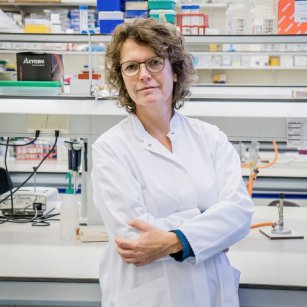
Over a century ago, researchers discovered that in the brains of people with Alzheimer's disease, some brain cells with tau protein accumulations also contained granulovacuolar degeneration vesicles (GVBs). GVBs are a type of lysosome, the cell's waste factories. At the time, it was unclear what the presence of GVBs meant for the brain cells. Scheper's laboratory has discovered that brain cells with GVBs can resist the toxic effects of tau clumps on protein synthesis and cell death. This research has been published in the journal Science Advances. This resilience, which is stimulated in brain cells with GVBs, is already naturally present in our brain cells. By further stimulating this process, brain cells with tau clumps can continue to function better. This research demonstrates new opportunities for developing treatments for brain diseases in which tau accumulates, such as Alzheimer's disease and frontotemporal dementia.
New protein production is possible despite tau clumps
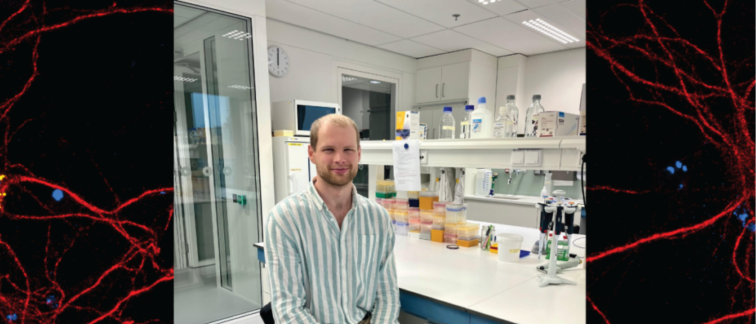
Neuroscientist Jasper Smits, along with a team of researchers from Amsterdam UMC and Vrije Universiteit Amsterdam, has mapped several key components of the underlying molecular mechanism. Crucially, nerve cells with GVBs, despite the presence of tau clumps, can still produce new proteins when they become active. This is essential for processes such as proper memory function. This demonstrates that the resilience associated with GVBs is crucial for maintaining proper brain cell function.
This resilience, which is stimulated in brain cells with GVBs, is already present in our brain cells. By further stimulating this process, brain cells with tau clumps can continue to function better. This research demonstrates new opportunities for developing treatments for brain diseases in which tau accumulates, such as Alzheimer's disease and frontotemporal dementia.
Read the publication in Science Advances: Neurons with granulovacuolar degeneration bodies are resilient to tau-induced protein synthesis impairment
The study was made possible by funding from the Dutch Brain Foundation/Coby van Nieuwkerk Fund and the Dutch Research Council (NWO).