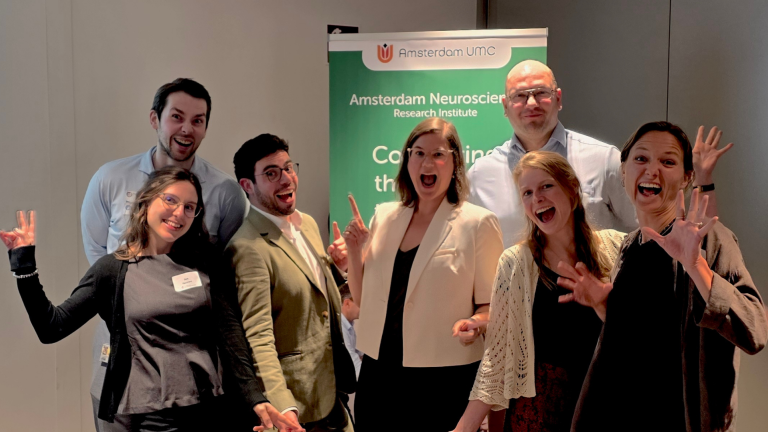
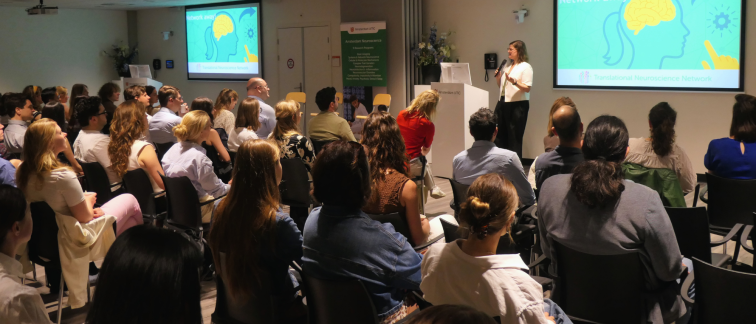
On May 28, approximately 80 enthusiastic neuroscience researchers gathered for a full day dedicated to exploring causality in neuroscience, welcomed by TN2 committee chair Linda Douw.
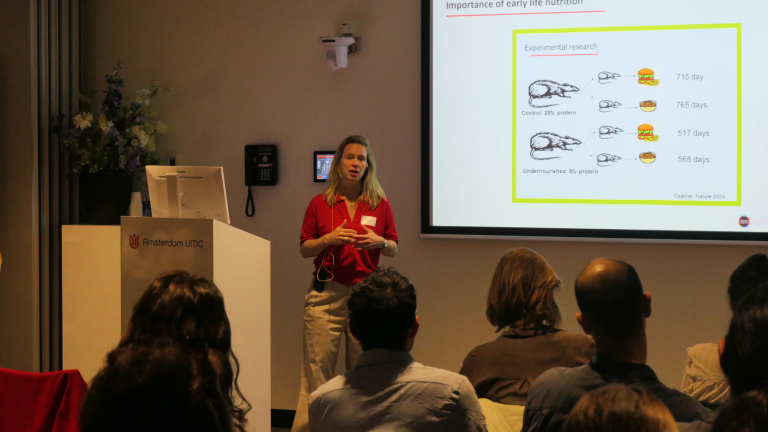
The first session of the day focused on viewing individuals as causal units in research or valorization. Susanne de Rooij presented the state-of-the-art on quasi-experimental designs, using the famine during WWII to establish the effects of malnutrition during pregnancy. Reflecting on more than 25 years of work in this field, she showed that men appear to be more affected, exhibiting smaller structural brain volumes. She also highlighted that the effects of prenatal undernutrition depend on the timing of exposure and may result not only from malnutrition itself but also from associated stress factors.
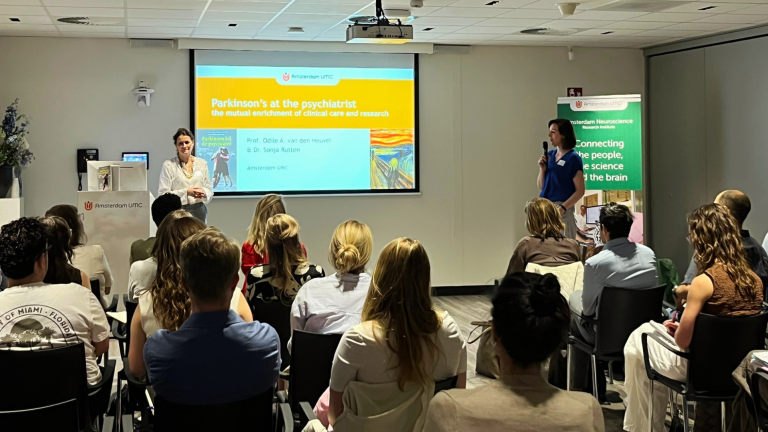
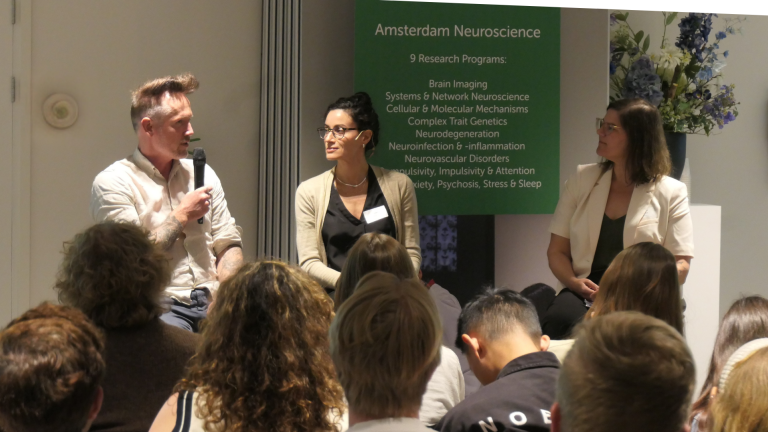
Next, Odile van den Heuvel and Sonja Rutten shared how their interactions with people living with Parkinson’s disease inspired both new research directions and the writing of their book. Reading excerpts from personal experiences and conversations, they demonstrated how writing a book, rather than a research article, allowed them to reach a much broader audience. The positive responses from patients were particularly moving, with many expressing that the book helped family and friends better understand their experiences.
Odile van den Heuvel: “Parkinson’s has traditionally been viewed as a movement disorder, but I believe we should recognize it as a neuropsychiatric disorder.”
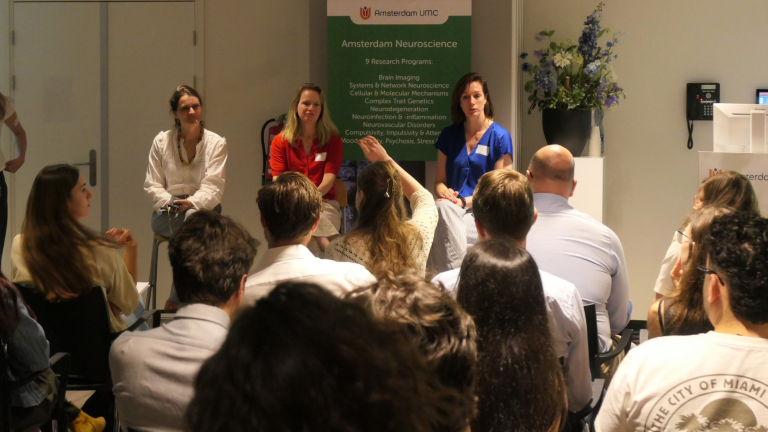
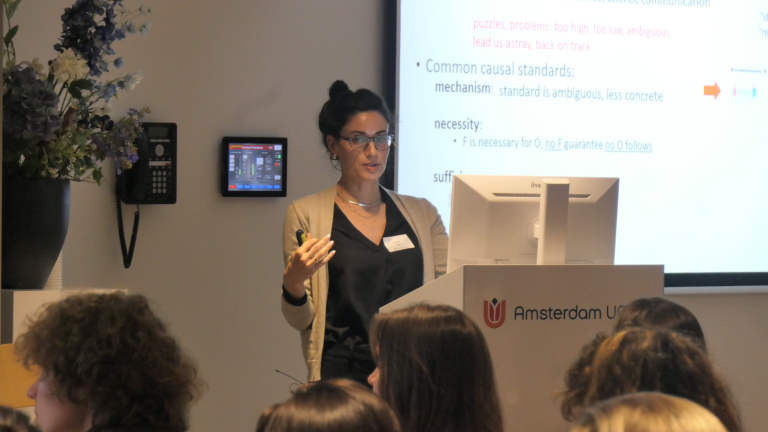
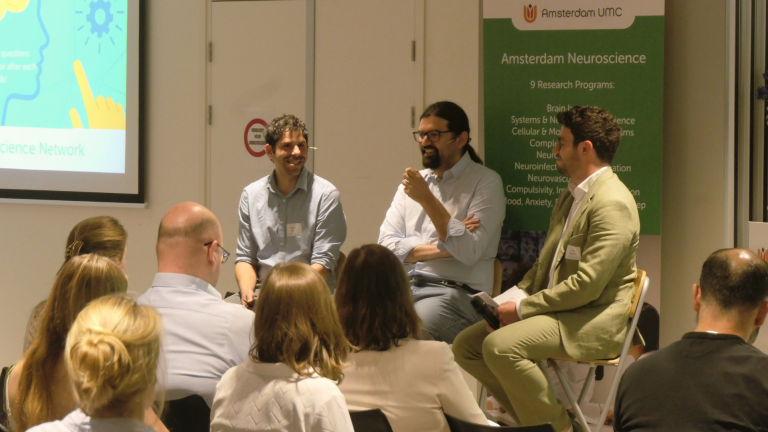
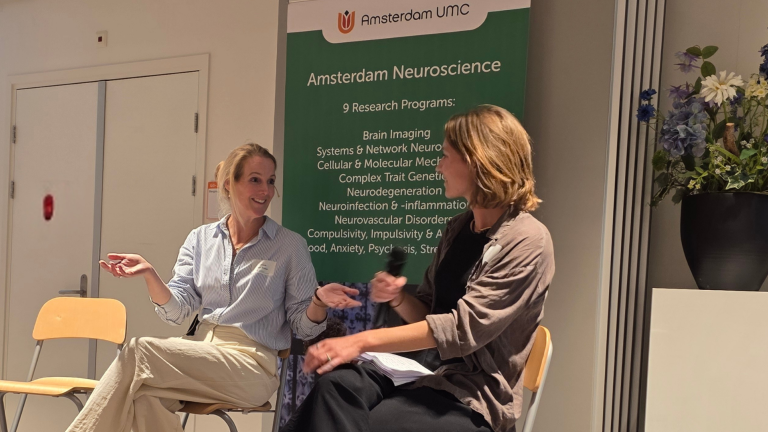
The symposium then shifted toward philosophical perspectives on causality. Leon de Bruin first talked about mechanistic versus topological explanations, ending with a more dynamic, interventionist view on how we should proceed in neuroscience. Keynote speaker Lauren Ross covered many familiar challenges in explaining disease and introduced the concept of minimal control. This framework avoids setting an unrealistically high standard for causation; for example, smoking would not be a cause of lung cancer if we ask the cause to always produce the same result. Vice versa, having too low a standard would mean that simply having lungs could be a cause of lung cancer, which also does not make much sense. The subsequent panel discussion challenged attendees to reflect critically on causal inference in their own research.
Lauren Ross: “You do not want perfect causation to be an enemy of genuine causation.”
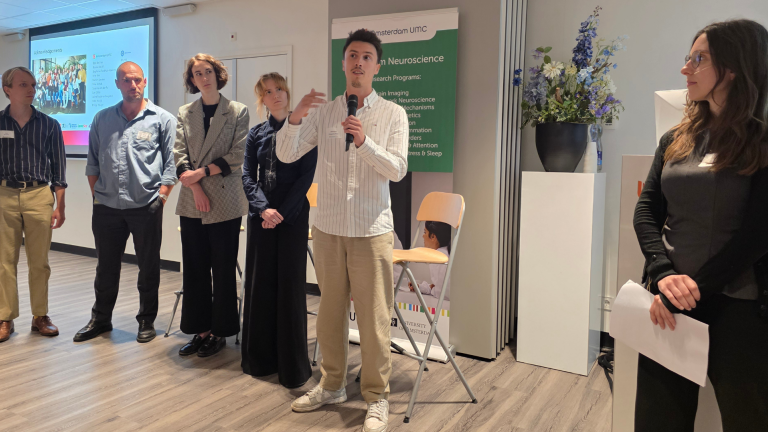
After lunch, the day continued with the newest addition to the TN2 format: early-career lightning talks, TED-talk style. The five most diverse and causality-fitting abstracts were preselected, after which the five presenters and part of the TN2 committee received professional training to translate their science to a (much) broader audience. It was lots of fun to witness the results, with engaging presentations by Toon Brouwer, Michaela Gúčiková, Eva Koderman, Niels Meijns, and Henrique Nogueira Pinto. Their talks showcased the breadth and creativity of translational neuroscience research.
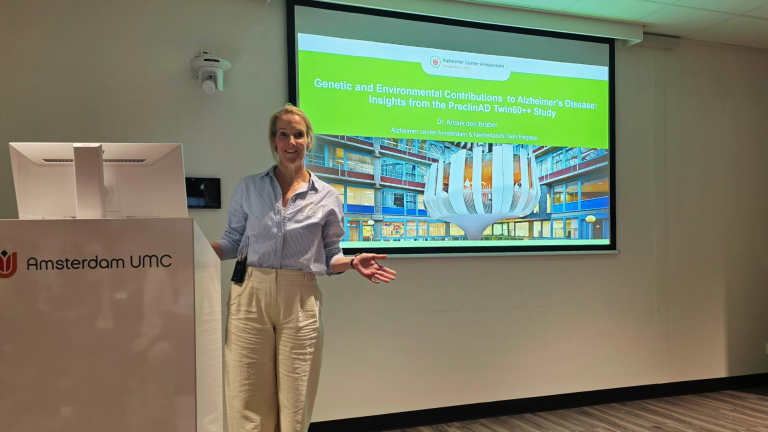
Anouk den Braber then highlighted the insights that twin studies can provide into Alzheimer’s disease. One of the striking findings she discussed was that twins do not develop amyloid-beta pathology simultaneously, suggesting an important role for environmental factors. And especially for the TN2 theme, she even dove into the potentially causal interpretations of such a study design, humorously noting that “twins themselves would disagree with you on how similar they are.”
Anouk den Braber: “Twins themselves would disagree with you on how similar they are.”
The final session explored how model systems can be used to probe causality in neuroscience across different levels of organization. Jorge Mejias demonstrated his work on in silico experiments through computational modeling, going from the microscale to the macroscale in elegant ways with the so-called “digital twins”. By integrating data across scales, these models provide new opportunities to study cognitive processes such as working memory and to better understand brain disorders through virtual experimentation.
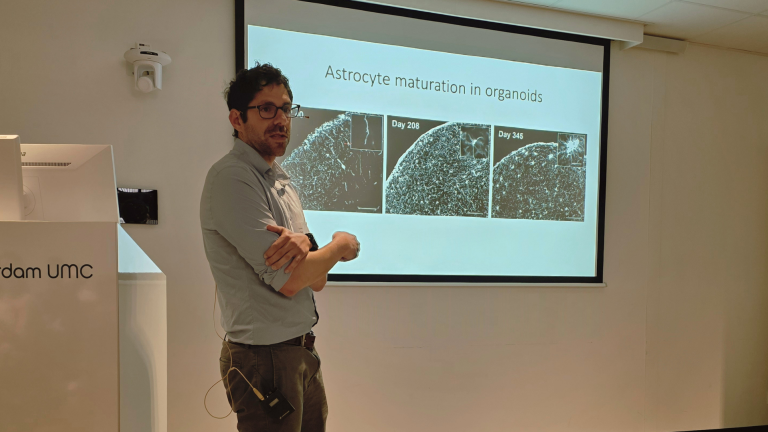
Keynote speaker Steven Sloan continued this theme by showcasing the power of human brain organoids and assembloids as experimental models. Because human astrocytes differ substantially from those in mice, these systems offer a unique window into human brain development and disease. Sloan illustrated how organoids can be used to investigate neurodevelopment, inflammation, and glioblastoma, revealing how astrocytes respond to different conditions and interact with their environment. His striking images, and memorable comparison between organoids and ‘pearl couscous’ left a lasting impression on the audience.
Looking back, the Translational Neuroscience Symposium offered an inspiring day of scientific exchange, philosophical reflection, and translational innovation. The event beautifully showcased both the diversity of Amsterdam Neuroscience and the strength of its translational neuroscience community.
Pictures of the day