


The six projects within Amsterdam Neuroscience explore a range of approaches to treating Alzheimer’s disease, from drug development to brain stimulation and gene therapies. All aim to translate new scientific insights into practical applications. The projects highlight close collaboration between VU Amsterdam institutes, including the Center for Neurogenomics and Cognitive Research (CNCR) and the Amsterdam Institute of Molecular and Life Sciences (AIMMS), and the Alzheimer Center Amsterdam at Amsterdam UMC.
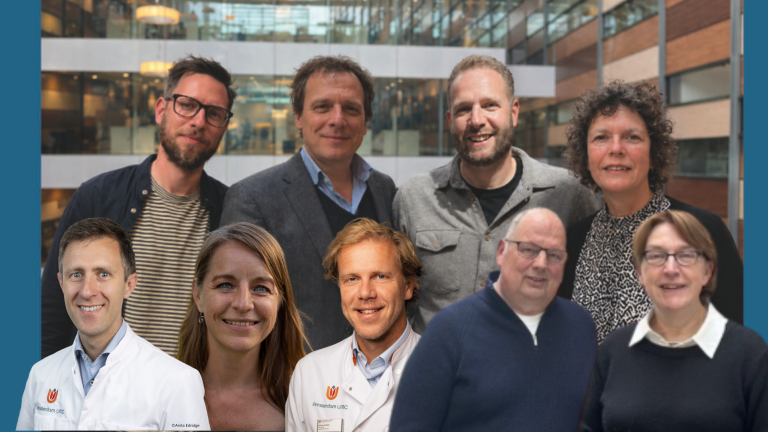
Ruud Wijdeven (Amsterdam UMC, Candidate Center) and Iwan de Esch (VU AIMMS, Chemistry & Pharmaceutical Sciences) focus on compounds that may block the cellular uptake of toxic APOE4, a major genetic risk factor for Alzheimer’s disease.
Rik van der Kant (VU CNCR and Alzheimer Center Amsterdam, Amsterdam UMC) is investigating whether existing drugs can reduce fibronectin levels and help protect the blood–brain barrier in APOE4 carriers.
Willem de Haan (Alzheimer Center Amsterdam, Amsterdam UMC) studies brain stimulation as a treatment strategy, focusing on whether an initial hospital-based optimization phase followed by daily at-home stimulation can improve outcomes and better integrate therapy into patients’ daily lives compared to standard care.
Sven van der Lee and Jetske van der Schaar (Alzheimer Center Amsterdam, Amsterdam UMC) collaborate with Vivi Heine (Amsterdam UMC) and Bart de Strooper (KU Leuven) on rare hereditary forms of Alzheimer’s disease, exploring antisense oligonucleotides (ASOs) to silence disease-causing genes. In addition, they want to establish a national registry to better identify and engage affected families for future targeted therapies.
Iwan de Esch (VU AIMMS) and Wiep Scheper (VU CNCR and Amsterdam UMC, Human Genetics) are working on dual inhibition of PDE4 and PDE7, with the aim of combining anti-inflammatory and cognition-supporting effects in a single therapeutic strategy.
Rob Leurs (VU AIMMS, Chemistry & Pharmaceutical Sciences) and Elga de Vries (Amsterdam UMC, Molecular Cell Biology & Immunology) are studying ACKR3 as a target to reduce harmful immune cell entry into the brain and limit neuroinflammation.
The awarded projects highlight the urgency for development of novel and more effective therapies for Alzheimer’s disease, and the need for cross-disciplinary approaches spanning chemistry, genetics, and biology to develop such therapies.