

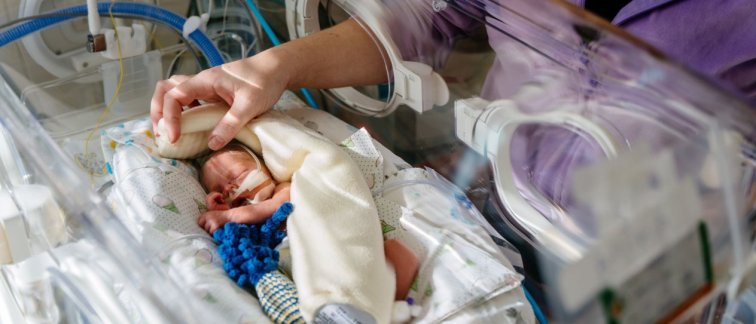
According to a nationwide study, more than one in three mothers and one in six fathers of very premature infants experience symptoms severe enough to suggest the possibility of post-traumatic stress disorder (PTSD). “If we know which parents are struggling, we can provide targeted support at an early stage. That is better for both the parents and the child,” says researcher Lotte Haverman.
“Premature birth and admission to a neonatal intensive care unit is not only a major medical event, but can also have a profound emotional impact on many parents. This nationwide study shows that we need to take their symptoms seriously,” emphasizes psychologist Lotte Haverman, professor at the Emma Children’s Hospital of Amsterdam UMC.
Mental health problems
The researchers followed 446 very premature babies, born before 29 weeks of pregnancy. Parents of 217 families completed questionnaires about their mental well-being: shortly after the birth, one month later, and around the baby’s due date. “Although the majority of parents are doing well, we found that a substantial proportion experience psychological symptoms,” says Kirsten Muller, psychologist and researcher at Amsterdam UMC and Erasmus MC. She worked on the study on behalf of both university medical centers, with all Dutch neonatal intensive care units participating.
Actual figures are probably higher
On average, mothers reported more symptoms than fathers. Around the time of the baby’s due date, more than one third of mothers had symptoms consistent with PTSD. Among fathers, this was approximately one in six. The actual figures are probably even higher. Researcher Gerbrich van den Bosch, neonatologist at Erasmus MC, explains: “Not all parents participated in the study. For example, parents who did not speak Dutch or English were unable to complete the questionnaires. In addition, we deliberately did not send questionnaires to parents whose son or daughter had died. We also have indications that parents experiencing the most severe stress symptoms were less likely to complete the questionnaires.”
A deeply distressing experience
Almost 40 percent of mothers were clearly experiencing depressive symptoms during the first weeks after the birth. Among fathers, this was approximately 20 percent. Depressive symptoms among mothers decreased somewhat over time. However, PTSD symptoms remained notably high among many parents. PTSD can develop following a highly distressing event, such as violence or a life-threatening situation. Symptoms can include re-experiencing the event, avoidance, negative thoughts and feelings, and heightened arousal. These symptoms not only affect the parents’ lives, but may also affect their prematurely born child. Muller says: “We know that children’s development is influenced by their parents’ well-being.”
Risk factors for more symptoms
The researchers also examined which factors increased the risk of psychological symptoms. Both mothers and fathers reported more symptoms if they had experienced stressful life events in the past, had previously received mental health treatment, or experienced high levels of stress during pregnancy or their child’s hospital stay. Among fathers, the baby’s condition, the number of children in the family, and the level of perceived support also played a role.
Monitoring parents’ well-being
According to the researchers, it is important to monitor parents’ mental health as a standard part of care following premature birth. The Emma Children’s Hospital has developed the KLIK PROM portal for this purpose: a digital system in which parents complete online questionnaires about their well-being, symptoms, and experiences. This gives healthcare professionals a clear picture of how parents are doing and whether they may need additional support.
EMDR
“By identifying symptoms early, we can ensure that parents receive the support and treatment they need in a timely manner. This is better for both parents and children,” says Lotte Haverman. “If we can identify which parents are struggling, we can provide targeted support and help prevent symptoms from persisting unnecessarily.”
The findings highlight the importance of minimizing parents’ stress during and after their child’s stay in the neonatal intensive care unit.
The researchers also believe that therapies such as Eye Movement Desensitization and Reprocessing (EMDR) could become a more integral part of care. They therefore plan to investigate how effective EMDR is for parents of premature children. If the therapy proves effective, they believe it should become a standard part of care.
HIPPO study
This research is part of the nationwide HIPPO study (Happiness for the Improvement of Premature and Parental Outcome). It is a collaboration between Amsterdam UMC, Erasmus MC, UMC Utrecht, Neonatology Network Netherlands, and the parent and patient organization Care4Neo, with additional support from the VriendenLoterij. The study was conducted in all Dutch neonatal intensive care units.
The results are published in the journal Pediatrics.
Beeld: Shutterstock
This article is copied and translated from Amsterdam UMC Vandaag