

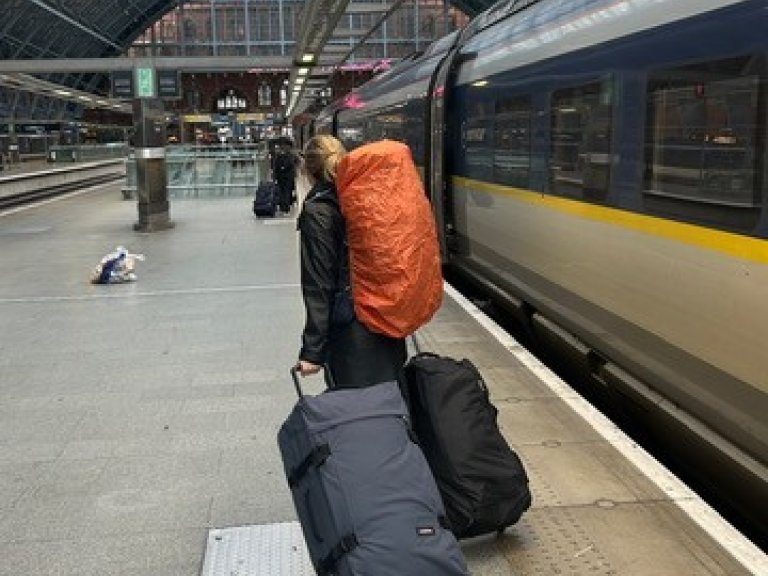
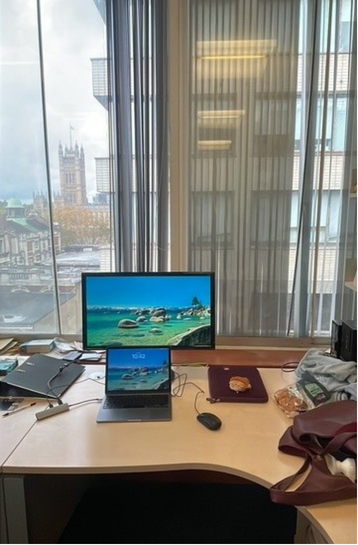
In this series, we highlight four researchers who undertook a work visit to an international institute with the support of the ACS Work Visit Grant. Today, we feature Margriet Bogerd, Cardiology Resident (ANIOS) at Amsterdam UMC. She worked as a research fellow in interventional cardiology at King's College London (Guy's and St Thomas' Hospital), supervised by Prof. Divaka Perera.
From clinical trials to big data
During her five-month work visit, Margriet was involved in multiple projects, most of which have led to fruitful collaborations that continue to this day and are expected to result in several interesting publications in the near future. One of these projects was the CHIP-BCIS 3 trial, a randomized study investigating whether left ventricular unloading with a microaxial flow pump is beneficial in patients undergoing high-risk coronary intervention. The study has recently been published in the New England Journal of Medicine. Margriet joined the study in its final stages and has since focused on periprocedural myocardial infarctions.
She also temporarily took over the HERACLES trial, which investigates the impact of different forms of unloading during VA-ECMO on coronary perfusion in patients with cardiogenic shock. Results are expected soon.
In addition, Margriet led a large-scale data project across multiple disciplines and hospitals. The project explored whether the national PCI registry, a registry of all angioplasty procedures, and the national intensive care registry for cardiogenic shock could be linked, and whether there is merit in combining these registries. Beyond the technical skills gained, the project provided valuable lessons: "Even when a large overlap is expected in advance, quantifying and testing it, for example in a pilot study, is valuable in itself."
Lessons from the English research culture
The visit also offered a broader perspective on the differences between the research landscapes in the Netherlands and England. In England, patient data is available for research by default, unless patients actively opt out under the National Data Opt Out system. This is a highly pragmatic approach to conducting research. Margriet also formed the impression that study-related procedures, such as an additional outpatient visit, are more readily accommodated than in the Netherlands, and that clinical trial units play a significant supportive role.
The research culture itself also differed notably. As Margriet explains: "I was impressed by how well research is organized in England, with clear structures and defined team roles, strong coordination and efficient processes. By contrast, the Dutch system can sometimes feel like you have to reinvent the wheel, but there is a lot of room for your own input and ideas, which are often highly valued. This gives a lot of energy, at least for me." This experience gave her valuable insight into what matters most in her work and organization.
"I was impressed by how well research is organized in England, with clear structures and defined team roles, strong coordination and efficient processes. By contrast, the Dutch system can sometimes feel like you have to reinvent the wheel, but there is a lot of room for your own input and ideas, which are often highly valued. This gives a lot of energy, at least for me."
Personal experiences in London
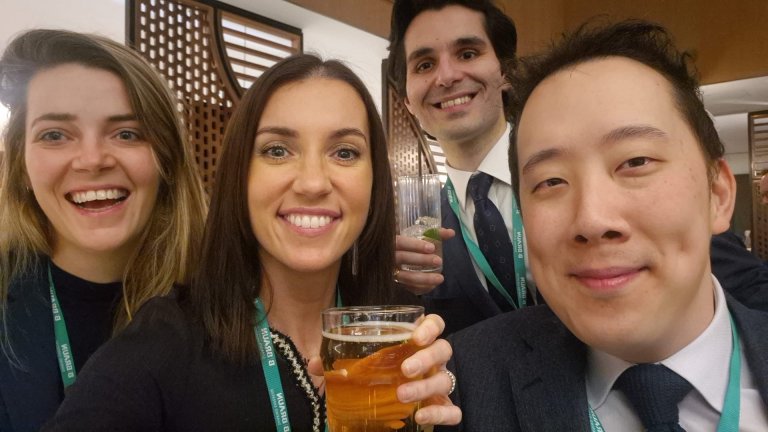
Beyond the research, Margriet had a wonderful time in London. In the hospital, she spent considerable time in the cardiac catheterization laboratory, where she learned a great deal about coronary physiology. She also attended a local cardiology conference and visited London cardiologists involved in the NORSHOCK study. She is still in frequent contact with the research group, and together they are currently working on several projects.
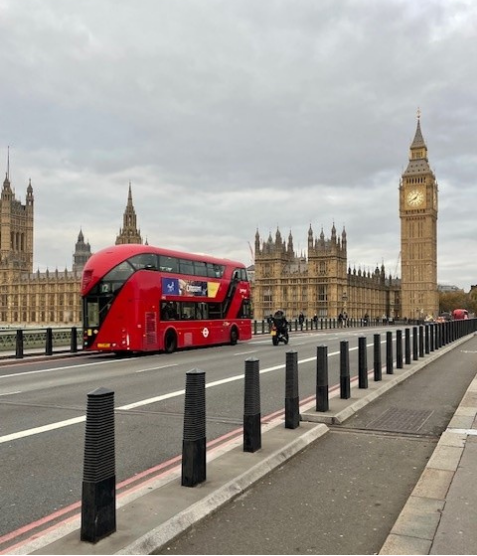
Outside the hospital, the city itself made a lasting impression: "I completely fell in love with London: the incredible restaurants, the amazing Indian cuisine, the cozy pubs, the West End theaters, and the fantastic Christmas atmosphere. It was an unforgettable time that I look back on with great pleasure, and from which I take a lot for my future career."
ACS Work Visit Grant
The grant allows PhD students and postdoctoral researchers to receive training in new techniques (both preclinical and clinical) or to initiate collaboration with a research institute abroad. For more information, see the ACS Work Visit Grant page.