

From lab to society: How Bernadette de Bakker creates impact through valorisation
Lees dit artikel in het Nederlands
“I have the knowledge and expertise to better support parents. So I also feel a responsibility to take that knowledge out of the lab and make it accessible”
- Bernadette de Bakker, on valorisation and social impact.
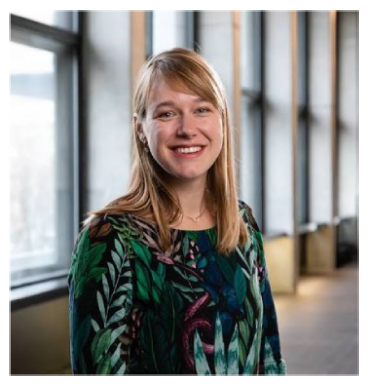
For Bernadette de Bakker, valorisation is not an ‘extra’ alongside her work; it is one of her core tasks. As an assistant professor, she has been working for fifteen years as an embryologist, doctor and researcher at Amsterdam UMC to develop ways of bringing knowledge about embryonic development to society – from 3D embryo models to publications and practical products for parents and fellow professionals.
During her PhD, Bernadette developed a 3D embryo atlas that was published in Science. The interactive 3D models have since been accessible worldwide and are used in more than 65 countries, notably in countries such as Mexico and Brazil. International companies also collaborate with her: for instance, a major provider of digital anatomy tools incorporated her 3D models into their commercial app, with a licensing arrangement, an upfront fee and royalties for Amsterdam UMC.
From scientific discovery to practical applications
In addition, together with a German 3D printing company that previously worked for Porsche, she initiated the development of tangible 3D embryo models. These prints are used in education, in obstetrics and with parents, for example in relation to miscarriages: to show just how small an embryo actually is and to support conversations about loss and acceptance. The models are now more widely available via 3dembryoprints.com, and Amsterdam UMC Holding is working on a limited company structure to further develop this as a wholly-owned subsidiary.
Driven by expertise and personal experience
Bernadette’s motivation clearly stems from both her professional expertise and personal experience. She is one of the very few morphological embryologists in the world and founded the Dutch Fetal Biobank, where parents can donate their lost baby to science. She herself has suffered three miscarriages and has seen first-hand how guilt and uncertainty can weigh heavily on parents. “I have the knowledge and expertise to help parents better. So I also feel a responsibility to take that knowledge out of the lab and make it accessible,” she explains. In collaboration with Amsterdam UMC, she has set up the company Clearity Care to provide parents with answers: Clearity Care — Finally, answers after pregnancy loss.
Valorisation requires time, visibility and collaboration
Valorisation takes time, she acknowledges, and requires a certain type of researcher: someone who enjoys being in the spotlight, likes speaking to the media, networking with companies and investors, and can juggle multiple tasks at once. At the same time, she sees that support from the organisation is improving, for example through IXA and the valorisation council, although the researcher’s own involvement remains indispensable when it comes to contracts, patents and substantive decisions.
5 practical tips for successful valorisation
Her practical tips for valorisation within Amsterdam UMC:
- Identify and make use of ‘academic entrepreneurs’
Not every researcher needs to do everything; that is the strength of Recognition & Appreciation. Identify those who thrive on media, networking and closing deals, and give them the space and mandate to do so. Others may excel primarily in research or teaching, whilst the ‘entrepreneurs’ take the lead in commercialisation processes. - Invest in networks – including outside academia
Many collaborations arise through visibility: a newspaper article, a conference talk, an informal meeting. Bernadette actively attends gatherings where entrepreneurs and investors meet and sees this as part of her job, not as a side issue. - Work closely with commercialisation support (IXA/Holding)
Involve IXA and the Holding at an early stage in the development of ideas. They assist with licences, contract negotiations, company structures and royalty agreements, so that the researcher can focus on content and vision. - Set aside time for long-term planning and vision
Knowledge transfer won’t succeed if you’re just putting out fires and clearing your inbox. Bernadette systematically sets aside time to think about strategy, new products and social impact. This provides direction for the many daily decisions she has to make. - Ensure practical support
A full inbox and diary are a real bottleneck. Administrative support with appointments, emails and scheduling helps free up time for the valorisation activities that really make a difference.
For Bernadette, valorisation is ultimately a way of making the impact of her research tangible: for students, healthcare professionals and, above all, for parents facing loss and uncertainty. “Then it won’t have been in vain,” she often hears from parents who donate to the Fetal Biobank. It is precisely there, in that combination of high-quality science and concrete social significance, that she sees the core of her work.