

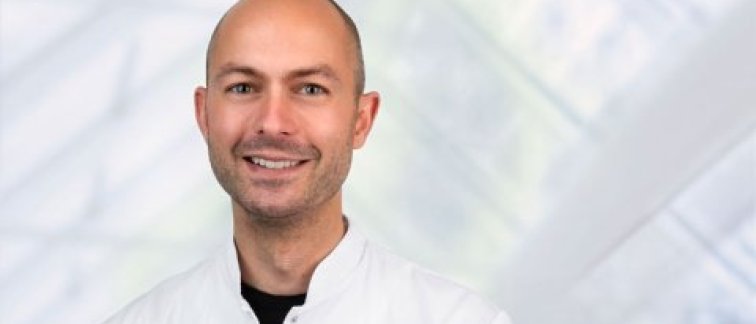
We are proud to announce that Dr. Lieuwe Bos has been appointed Professor of Precision Medicine in Intensive Care at the University of Amsterdam. His professorship is affiliated with the Amsterdam Institute for Immunology and Infectious Diseases (AI&I) and Amsterdam Cardiovascular Sciences (ACS).
Dr. Bos’s research centers on the immune response in acute respiratory failure and severe infections in critically ill patients, conditions such as pneumonia, Acute Respiratory Distress Syndrome (ARDS), and sepsis. These are among the most common reasons for intensive care unit (ICU) admission, yet current treatments are largely supportive and not tailored to individual patients. By combining clinical studies with advanced technologies like single-cell sequencing, high-dimensional immune profiling, and computational modeling, dr. Bos’s group aims to understand why patients with seemingly similar diseases follow very different clinical trajectories. The ultimate goal: move from a one-size-fits-all approach to precision medicine, selecting the right therapy for the right patient at the right time.
A journey inspired by clinical observation
Dr. Bos’s interest in precision medicine was sparked by his experiences in the ICU, where he observed that patients with what appears to be the same diagnosis could respond very differently to treatment. This led him to question whether these patients truly had the same disease. His PhD research under Prof. Peter Sterk, a pioneer in precision medicine for airway disease, further shaped his approach. Over the years, Dr. Bos has worked to define biological, radiological, and physiological phenotypes of ARDS and pneumonia, and is now translating these insights into clinical practice.
The importance of precision medicine in intensive care
Critical care medicine is at a turning point. While clinicians make individualized decisions for each patient, scientific research has often focused on broad clinical syndromes, overlooking patient heterogeneity. This conflict between clinical care and science is at the heart of the challenge in intensive care.
Precision medicine offers a way forward by identifying the biological mechanisms driving disease in specific subgroups, enabling targeted treatments. This is especially relevant in conditions like pneumonia and sepsis, where the immune response can range from overwhelming inflammation to profound immune suppression. Dr. Bos: ‘Understanding that heterogeneity is essential if we want to develop effective therapies’.
Challenges and opportunities
While precision medicine is gaining attention especially in fields like oncology, intensive care presents unique challenges. ‘Critical illness is extremely complex: patients often have multiple interacting diseases, and the biology can change rapidly over time,’ Dr. Bos explains. Diagnostics for patient classification must be available at the bedside within hours. This is a completely different challenge than those faced in fields like oncology and rheumatology. Dr. Bos: ‘As we learn to leverage the rich datasets we already have and complement them with rapid, point of care biological tests, I expect precision approaches to become an increasingly central part of critical care research and practice’.
Ongoing projects
Dr. Bos’s group has moved beyond describing heterogeneity to developing intervention studies that integrate phenotypes as treatable traits. The PEGASUS trial, for example, tests personalized mechanical ventilation for ARDS. The PANTHER trial, an adaptive platform study, uses a point-of-care inflammation test to stratify ARDS patients and target immunomodulatory treatments accordingly.
‘One line of work that I find particularly exciting is our effort to map the immune landscape of the lungs in patients with severe respiratory failure,’ Dr. Bos shares. By analyzing cells directly from the lungs using high-dimensional technologies, his group is uncovering new insights. ‘We have observed the presence of distinct subsets of immature neutrophils and monocytes in the lungs of critically ill patients. These cells appear to influence how patients respond to infection and may help explain why some patients recover while others deteriorate. Understanding these mechanisms opens new possibilities for targeted therapies.’
Fostering collaboration and training the next generation
Dr. Bos is committed to building bridges between immunology, infectious diseases, and critical care medicine. ‘Many of the most important questions in intensive care are fundamentally immunological questions, yet historically these fields have often operated separately.’ Within AI&I, he hopes to foster collaborations that connect basic immunology with clinical research in critically ill patients.
Dr Bos: ‘Progress in this field requires interdisciplinary collaboration. Clinicians, immunologists, engineers, epidemiologists and data scientists all bring essential perspectives. One of my goals is to create an environment where these disciplines interact naturally and where young researchers feel encouraged to explore ideas across traditional boundaries. I’m very proud to say that PhD students in my group are from very different backgrounds and I enjoy learning from them every day.’
Looking ahead
A central challenge remains: translating our growing understanding of immune heterogeneity into actionable treatment strategies. ‘Ultimately the goal is to move toward a situation in which treatment decisions in the ICU are informed not only by clinical parameters but also by a detailed understanding of the patient’s immune state.’
Inaugural lecture preview
In his inaugural lecture, Dr. Bos will address the tension between treating populations and treating individuals in medicine. ‘Much of modern medical evidence is generated in large populations, yet every patient we treat is unique. Precision medicine attempts to bridge that gap by combining rigorous scientific evidence with a deeper understanding of individual biology.’
About Dr. Lieuwe Bos
- Position: Pulmonologist-Intensivist, Professor of Precision Medicine in Intensive Care
- Research: Pulmonary inflammation and infection, sepsis
- Roles: Principal investigator of the PEGASUS trial, European lead for the PANTHER trial, Chair of the Laboratory for Experimental Intensive Care and Anesthesiology (LEICA)
- Personal: Lives in Weesp with his partner and two children, enjoys running back and fort to Amsterdam UMC and swimming in “the gouw” during summer
Text: Lieuwe Bos and Esmée Vesseur