


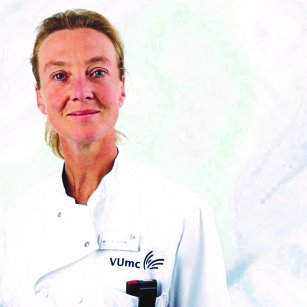
Dr. Irene Bultink, principal investigator at Amsterdam UMC and member of the Amsterdam institute for Immunology and Infectious diseases was invited by the highest-ranked scientific journal in the field of rheumatology ‘Nature Reviews Rheumatology’ (impact factor 32.7) to write a comprehensive review article on fertility, pregnancy and lactation in women with systemic lupus erythematosus (SLE).
Her invited review, titled ‘Fertility, pregnancy and lactation in women with systemic lupus erythematosus’, synthesizes current evidence and clinical experience at the intersection of SLE, reproductive immunology and women’s health.
Central message: pregnancy is feasible, but still high‑risk
The review underscores that, thanks to advances in care, pregnancy is feasible for most women with well-controlled SLE. However, it remains a high‑risk trajectory for both patients and clinicians due to several reasons. First of all women with SLE face a substantially increased risk of maternal complications and adverse fetal outcomes compared to the general population. Furthermore, the risk of disease flares is increased during pregnancy and the postpartum period.
To mitigate these risks, dr. Bultink’s review emphasizes the importance of:
Preconception counselling
Risk stratification
Careful pregnancy planning
Timely medication adjustment
Multidisciplinary management (rheumatology, immunology, obstetrics, and others)
The article also identifies two major domains where knowledge gaps still hinder optimal care: the pathogenesis of pregnancy complications in women with SLE, and the effects of immunosuppressive medications during conception, pregnancy and lactation.
Closing these gaps is crucial to improving both maternal and fetal outcomes.
A call for collaborative networks
Dr. Bultink: ‘I hope that this review will motivate clinicians and researchers worldwide to join forces in new collaborative research networks.’
These networks should bring together rheumatologists, immunologists, obstetricians and patient research partners. Such collaboration is essential to unravel the mechanisms underlying pregnancy complications in SLE and to investigate not only the safety but also the efficacy of current and emerging immunosuppressive and immunomodulatory agents in improving pregnancy outcomes. The review thus serves both as a state-of-the-art overview and as a call to action for the international community.
Innovations and regulatory change
The article also connects to several promising developments on the horizon. Within the FaMaLe research team at Amsterdam UMC, Dr Wendy Dankers, in close collaboration with Dr Gijs Afink from the Reproductive Biology Lab, has developed two innovative organoid models that enable functional studies of communication between SLE immune cells and placental cells. These models will be used to investigate the effects of established and emerging therapeutic agents on biological processes at the maternal–fetal interface and are expected to yield mechanistic insights that have been difficult to obtain from clinical studies alone.
In parallel, an important regulatory milestone is the May 2025 publication of the ICH E21 Guideline by the European Medicines Agency (EMA) on the inclusion of pregnant and breastfeeding individuals in clinical trials. This guideline may open new approval pathways and practical opportunities for clinical trials in pregnant and lactating women with SLE, as well as in women with other systemic autoimmune diseases characterized by a high risk of adverse pregnancy outcomes.
Future clinical trials in pregnant and lactating women should not only focus on maternal disease activity (eg. anti-dsDNA titres, complement levels, type I IFN activity, occurrence of disease flares) during pregnancy and postpartum, and on evaluating whether treatment improves pregnancy outcomes. To better understand how immunosuppressive agents influence the immune system, dr. Bultink believes that future clinical trials should also characterize drug transfer by measuring drug levels in maternal blood, breast milk and infant blood. ‘Furthermore, the occurrence of infections and vaccine responses should be investigated in children exposed in utero to immunosuppressive agents’, dr. Bultink adds.
Whether the immunological pathways underlying pregnancy complications in SLE are shared with other high‑risk systemic autoimmune diseases (such as Sjögren’s syndrome, antiphospholipid syndrome, rheumatoid arthritis and systemic sclerosis), or with pregnancies complicated by preeclampsia in otherwise healthy women, is currently unknown.
To systematically explore these potential shared mechanisms, the FaMaLe study team has established an international research consortium with academic partners in Gothenburg (Sweden), Odense (Denmark), Hamburg (Germany) and UMC Groningen (the Netherlands). This initiative has recently been funded by FOREUM (European Foundation for Research in Rheumatology), enabling in‑depth, multicenter investigations into the immunological basis of pregnancy complications across diseases.
Together, these scientific and regulatory advances could substantially accelerate progress in evidence-based treatment during pregnancy.
Clarifying knowledge gaps
In writing this invited review, Dr Bultink systematically synthesized the evidence on preconception counselling, risk stratification, pregnancy planning, management and monitoring during pregnancy and postpartum, and medication safety throughout the reproductive journey in systemic lupus erythematosus. This process further clarified where knowledge is robust and where evidence is still limited, and strengthened her conviction that international, multidisciplinary collaborative research networks are essential to address the most pressing questions in this field.
What this means for patients
Ultimately, the review aims to directly benefit women living with SLE and their families. By providing clinicians with evidence-based guidance on counselling, risk assessment, management strategies and medication safety across the reproductive lifespan, it seeks to improve the preparation and support for women with SLE who wish to become pregnant, optimize pregnancy management to reduce complications for both mother and child, and advance long-term health outcomes for women with SLE and their offspring.
For more information contact Irene Bultink (iem.bultink@amsterdamumc.nl) or read the scientific publication below:
Bultink, I. E., Dankers, W., de Boer, M. A., & Schreiber, K. (2026). Fertility, pregnancy and lactation in women with systemic lupus erythematosus. Nature Reviews Rheumatology, 1-17.
Amsterdam UMC researchers involved:
Irene E.M. Bultink, Rheumatologist and Principal Investigator1,2
Wendy Dankers, Assistant Professor1,2
Marjon A. de Boer, Gynecologist and Principal Investigator2
1Amsterdam Institute for Immunology and Infectious diseases (AI&I), Amsterdam UMC, the Netherlands
2Amsterdam Reproduction & Development (AR&D), Amsterdam UMC, the Netherlands
Funding
No funding or grant was obtained for writing this review article.
Text: Irene Bultink and Esmée Vesseur
Learn more about the Lupus research being conducted at AI&I:
New Hope for Autoimmune Diseases: Telitacicept Shows Promise in Lupus Clinical Trial (December 2025)
FaMaLE study: new approach to understanding lupus pregnancy risks (October 2025)