

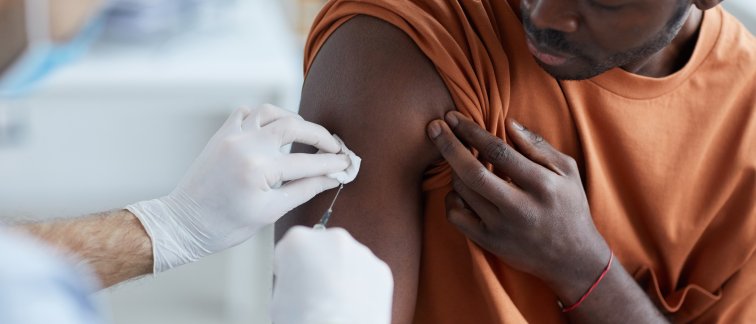
At the Amsterdam Institute for Immunology and Infectious Diseases (AI&I), we focus on three key research areas:Post-Acute Infection Syndromes (PAIS), Immunomonitoring, and Vaccination. Regularly, we highlight one of these areas, exploring essential knowledge, challenges, and real-world impact. In Q3 2026, our spotlight is on Vaccination. In this article, written in collaboration with AI&I researcher Marit van Gils, we explore the topic in depth.
What is vaccination?
Vaccination is a medical intervention that trains the immune system to recognize and defend against specific pathogens, such as viruses or bacteria. By exposing the body to a harmless form or component of a pathogen, vaccines stimulate the production of protective antibodies and immune memory cells. This prepares the immune system to respond quickly and effectively if exposed to the real pathogen, preventing illness. Thanks to vaccination, diseases like smallpox and polio have been (fully) eliminated or controlled in many parts of the world.
Vaccination is widely recognized as one of the most effective ways to prevent serious illness, especially during early life. Childhood vaccination programs have significantly reduced morbidity and mortality among young children. Before vaccines are approved they undergo rigorous testing for safety and efficacy. Side effects are mostly mild and temporary, such as a sore arm or slight fever, serious side effects are extremely rare and are continuously monitored.
Importantly, vaccination not only protects individuals but also communities, through herd immunity. This means that by vaccinating the population, vulnerable individuals that can not be vaccinated due to their disease, will be indirectly protected as the pathogens can not spread through the population anymore.
Vaccination myths and misconceptions
Despite their proven benefits, vaccines are often surrounded by misconceptions. Some believe vaccines are unsafe or cause severe side effects like autism, but extensive research has shown vaccines are safe and not linked to autism. Others think natural immunity is better, but acquiring immunity through infection, although it can sometimes lead to strong immunity, carries risks of severe illness. For example the measles virus is perceived as an innocent childhood disease, however it can cause severe disease with life-long disabilities such as deafness or neurological disorders (1 in 1.000-10.000 infected children) which can be prevented by vaccination. Another myth is that multiple vaccines can overwhelm a child’s immune system, but studies show that the immune system can handle many vaccines at once, without causing more side effects or decreasing vaccine efficacy. Finally, as many diseases for which we vaccinate become rare, people may question the need for vaccines, but declining vaccination rates can lead to new outbreaks of the pathogen, as seen with recent measles cases.As Dr. van Gils notes: ‘These misconceptions can lead to people avoiding vaccines, which increases the risk of diseases spreading in the community and causing increased morbidity and mortality, especially amongst infants, young children and immunocompromised patients such as cancer patients.’
Public trust in vaccine safety is challenged by fast-spreading misinformation, political polarization, and historical distrust of medical institutions. Confusion grows when communication from authorities is inconsistent or not culturally tailored. Concerns about pharmaceutical industry motives and a lack of transparency in how vaccines are tested and monitored further weaken confidence. Dr. van Gils: ‘Rebuilding trust requires clear, honest communication and genuine engagement with communities’.
Recent advances in vaccination
In recent years, major advances have transformed the field of vaccination, improving efficacy, safety, and protection against more diseases. Notably, new technologies like mRNA vaccines, first widely used during the COVID-19 pandemic, allow for much faster development and easy adaptation to emerging viruses.
mRNA vaccines can be developed quickly and adapted easily because the platform is modular, fast to design, and doesn’t require growing the actual virus. Instead, the genetic code (RNA) for a specific part of the pathogen is synthesized in the lab, which can then be produced in large quantities and rapidly modified for a different pathogen or a new variant. Once the platform is proven safe for a specific pathogen, regulators can evaluate updates more quickly, similar to how flu vaccines are updated annually. This flexibility means that mRNA vaccines can be rapidly deployed in response to new outbreaks, and the same technology can be used for a wide range of infectious diseases.
Artificial intelligence (AI) and machine learning are further accelerating vaccine development by analyzing large datasets to predict viral evolution and optimize vaccine design. In combination with mRNA technology, these tools are set to revolutionize how quickly and effectively new vaccines can be developed and updated.
Another important trend is the development of combination vaccines, which protect against multiple diseases with a single shot. This makes it easier for people, especially children, to stay up to date with their vaccinations and reduces the number of injections needed. For example, the MMR vaccine protects against measles, mumps, and rubella and are given to children at 1 and 5 years of age. Currently, combination vaccines for respiratory infections, including flu, covid and RSV, are in development, but also combinations especially designed for the global south like combinations for Hepatitis B and HPV.
Finally, new adjuvants, components within vaccines that boost the vaccine responses and provide longer-lasting protection, are being developed. Recent research has led to the discovery of new types of adjuvants that can help vaccines work better, especially for people with weaker immune systems, such as the elderly, like the now implemented RSV and Shingles vaccines for 50+ population.
Marit van Gils, PhD, is an Associate Professor specializing in Virology and Vaccine Immunology. She studied Medical Pharmaceutical Sciences at the University of Groningen and completed her PhD (2007–2011) in Dr. Schuitemaker’s lab at the University of Amsterdam. She continued as postdoc at Amsterdam UMC, with part of her research conducted at the Scripps Research Institute, San Diego USA. In 2017, Marit established her own research group at Amsterdam UMC, focusing on vaccine immunology, particularly how B cells and antibodies recognize vaccines.
Research at AI&I: Dr. Marit van Gils
Dr. Marit van Gils investigates how vaccines generate long-lasting antibody responses to increase the success of vaccines and to avoid yearly vaccinations in the future. During the COVID-19 pandemic, her team analyzed antibodies from recovered patients and compared immune responses after infection and vaccination. They examined how various COVID-19 vaccines, including mRNA vaccines, stimulate the immune system to produce strong antibodies. By comparing responses from natural infection and vaccination, they identified which vaccine strategies offer the most durable and effective protection and discovered that after infection less vaccine shots are needed to get full protection. This lead to a change in vaccine policy in The Netherlands, recommending only one shot when individuals had already had a proven SARS-CoV-2 infection.
Currently, using advanced models like the human 3D germinal center organoid system, the van Gils lab tests new vaccine formulations and adjuvants to understand what drives durable immunity. This advanced model will make animal testing redundant in the future and will accelerate vaccine development, as it allows for testing of much more conditions in the same timeframe as well as providing a better understanding of how individual differences, such as genetics or disease, can affect the responses to vaccines and adjuvants.
Dr. van Gils: ‘Researching vaccination has deepened my appreciation for the immune system’s complexity and power. Not all vaccines induce long-lasting immunity, and factors like vaccine platform, adjuvant, and dosing schedule matter. Individual differences, age, immune status, underlying health, also influence vaccine response. This highlights the need for tailored vaccination strategies, especially for vulnerable groups. Communicating these complexities without fueling vaccine hesitancy is challenging, but most hesitancy stems from fear and lack of understanding, which can be addressed with good communication.’
Ongoing challenges
For rapidly changing viruses like influenza (flu) and SARS-CoV-2, effective and durable vaccines remain a challenge. Influenza and SARS-CoV-2 vaccines are updated yearly, but protection varies. Universal vaccines would be a breakthrough, but decades of research have yet to deliver one with broad, lasting protection, due to the high evolution rate, immune evasion mechanisms and/or infection route of these viruses. Similarly, vaccines for complex pathogens like tuberculosis and malaria are also difficult to develop. Understanding why some vaccines like Hepatitis B virus and Measles provide lifelong protection while others do not is a key research goal and the new technologies, such as mRNA vaccines, adjuvants and AI may offer solutions in the future for these more difficult pathogens.

Equity and global health
Dr. Van Gils: ‘It is crucial to include diverse populations in vaccine studies, different ages, ethnicities, and health conditions, to ensure vaccines are safe and effective for all. Clinical trials should be conducted in regions where diseases are endemic, not just in wealthier countries. Ensuring fair access to vaccines is an ethical responsibility and essential for reducing global health inequalities.
As new and improved vaccines are developed, individuals and communities benefit from better protection against a wider range of diseases. This leads to fewer severe illnesses, reduced hospitalizations, and lower risk of outbreaks or pandemics. Improved vaccination also reduces healthcare costs, sick leave, and long-term complications, contributing to economic growth and better quality of life worldwide.
‘Vaccination is evolving from a static schedule into a dynamic, adaptive system that protects societies in real time. The science is accelerating, the tools are becoming more flexible, and the public conversation is becoming more complex. The next decade will be defined by how well we balance those forces,’ says Dr. van Gils.
Learn more about our AI&I vaccination research:
Vulnerabilities in Immunocompromised Patients Highlighted by Re-emerging Measles Infections in the Netherlands (January 2026)
No Solid Evidence Linking Vaccines to Autism Spectrum Disorder (January 2026)
HPV9 vaccine offers broader protection and saves healthcare costs in the long run (Juni 2025)
Text: Esmée Vesseur and Marit van Gils