

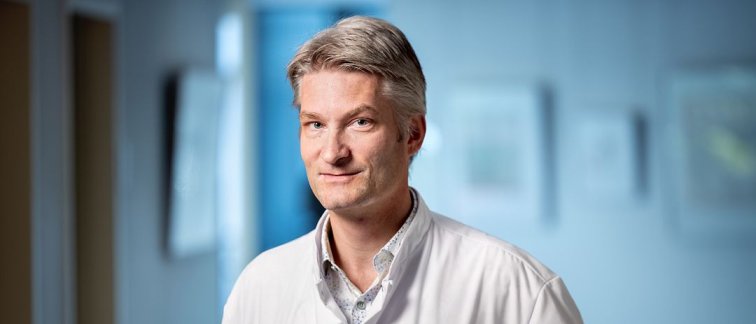
We are proud to announce that three Amsterdam UMC researchers have each been awarded a prestigious €1.5 million Vici grant from the Dutch Research Council (NWO). This funding will enable them to develop innovative research lines and expand their teams over the next five years. Among the recipients are Dr. Jeroen den Dunnen and Prof. Matthijs Brouwer, both members of the Amsterdam Institute for Immunology and Infectious Diseases (AI&I). In this article, we highlight the work of Prof. Matthijs Brouwer, who received the Vici grant for his groundbreaking research on improving the diagnosis of brain infections.
The challenge of diagnosing brain infections
Brain infections are life-threatening and notoriously difficult to diagnose, largely due to the limited tests available for analyzing cerebrospinal fluid. This often leads to delays in diagnosis and treatment, putting patients at risk. Prof. Brouwer’s Vici project aims to develop new, rapid, simple, and affordable tests to enable earlier diagnosis and improve patient outcomes.
Cohorts for better diagnosis
Prof. Brouwer’s interest in brain infections began during his neurology residency, when he joined a research team with Diederik van de Beek and Jan de Gans as a PhD-candidate to set up the nationwide bacterial meningitis cohort, a project that continues to provide valuable data to this day.
‘During my PhD project, I noticed that diagnostic delays were quite common in bacterial meningitis, mainly due to diagnostic uncertainty,’ he explains. This insight motivated him to establish a second cohort, specifically for patients with suspected central nervous system infections, the group in which new diagnostic tests should be evaluated. For this research, Prof. Brouwer was awarded both a Vidi grant and an ERC Consolidator Grant, enabling him to expand the cohort to over 4,000 patients. This extensive foundation now paves the way for his current Vici project, which aims to further accelerate and improve the diagnosis of brain infections.
'With a simple, cheap, and easy-to-implement test, we could change clinical practice for bacterial meningitis patients.'
Real-life impact
Prof. Brouwer was drawn to brain infection research because of its multidisciplinary nature. Internationally, this field brings together neurologists, clinical microbiologists, infectious disease specialists, and intensive care physicians, making it both diverse and intellectually stimulating. ‘A brain infection is truly a medical emergency, patients can deteriorate rapidly and may die within hours if the disease is not recognized and treated in time. Witnessing even a single case leaves a lasting impression and serves as a powerful motivation to improve diagnostics and treatment for these life-threatening conditions,' he explains. Over time, this drive has only grown stronger, fueling his commitment to advancing research and care in this challenging field.
Breakthroughs
A recent breakthrough from Prof. Brouwer’s group was last year’s discovery that measuring CRP in cerebrospinal fluid is an excellent test for diagnosing bacterial meningitis. ‘With a simple, cheap, and easy-to-implement test, we could change clinical practice for bacterial meningitis patients,’ he says. The Vici project will build on this success by searching for additional cerebrospinal fluid tests that can quickly identify the cause of central nervous system infections. The team will also use innovative sequencing techniques to investigate cases where no pathogen can be identified, including unbiased serological testing, targeted metagenomics, and swab sequencing.
Why brain infections are so challenging
Diagnosing brain infections is complex because symptoms can be highly variable and non-specific. ‘Fever is absent in 25% of patients with bacterial meningitis, as is neck stiffness,’ Prof. Brouwer notes. ‘If a person is only confused and has a headache, the list of potential causes is long, and a physician may not immediately think of a brain infection.’ For viral infections, the challenge is even greater, as the virus may only be present in the cerebrospinal fluid (CSF) for a short time. The inflammatory response, rather than the virus itself, may be responsible for many symptoms.
When a brain infection is suspected, only analysis of the CSF can provide a definitive diagnosis. However, there is often hesitancy to perform a lumbar puncture (LP) to collect CSF, as the procedure can be painful. Prof. Brouwer emphasizes, ‘The value of having diagnostic certainty in patients with a suspected CNS infection cannot be overstated. Therefore, we need to keep stressing the importance of a fast LP in these patients. For the subsequent analysis of the CSF, we can show clinicians how to use and interpret novel tests like CRP.’
Through his research, Prof. Brouwer identifies the clinical parameters most important for diagnosing brain infections and demonstrates how newly discovered CSF tests can aid clinical practice. ‘We see, for instance, with the introduction of CSF CRP measurements, that many clinicians are enthusiastic about getting additional diagnostic information that helps in the decision to start or withhold treatment,’ he says.
Advice for young researchers
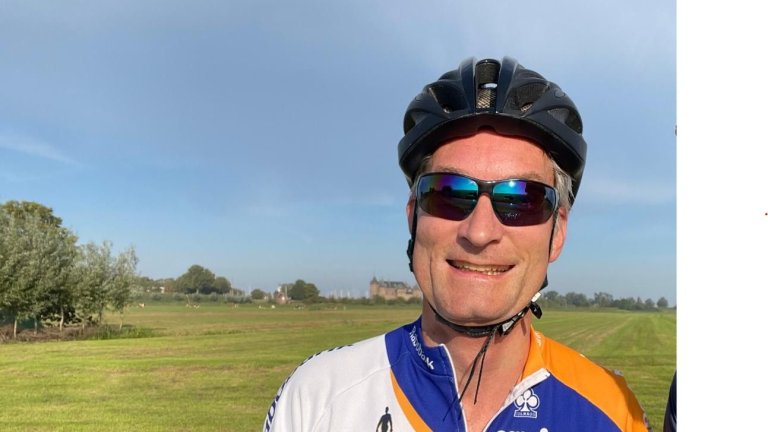
As a Vici grant recipient, Prof. Brouwer is recognized as a mentor for young scientists. His advice: ‘Enjoy the little things in research and do not let setbacks get you down. Working in a team makes the journey more enjoyable and helps everyone through the tough parts.’ He also emphasizes the importance of celebrating successes, both big and small. ‘For myself, the Vici application process was long and at times quite stressful, so I promised myself a new race bike (fietsie) if I succeeded. I just ordered it and cannot wait to take it out this summer.'
About Prof. Matthijs Brouwer
Prof. Brouwer is a neurologist specializing in neurological infections, autoimmune diseases, and cerebrospinal fluid circulation disorders. Outside of work, he enjoys running, squash, biking, playing piano, and traveling. He is married and has two sons.
About the Vici grant
The Vici grant is one of the largest personal scientific grants in the Netherlands, awarded to senior researchers who also mentor the next generation of scientists. This year, 39 leading researchers were selected from 384 applicants to receive this prestigious NWO grant.
Text: Matthijs Brouwer and Esmée Vesseur | Photo credits: Digidaan