
Understanding stroke
As a newly appointed Professor in Vascular Neurology, Coutinho clarifies the clinical terminology of stroke, which is an umbrella term for different conditions that share similar neurological presentations. Approximately 80% of strokes are ischemic, caused by a blockage of blood flow to the brain, while the remaining 20% are hemorrhagic, resulting from bleeding in or around the brain. Both conditions require immediate medical attention. As Coutinho notes, “Time is brain.” During an acute stroke, millions of neurons are lost every minute that brain tissue remains deprived of oxygen. Rapid diagnosis and treatment are therefore essential to improve outcomes and reduce the risk of permanent disability.
Research on cerebral venous sinus thrombosis
Coutinho's research focuses on the diagnosis and treatment of acute stroke, including both ischemic and hemorrhagic stroke, and cerebral venous sinus thrombosis (CVST). Although CVST accounts for only about 1% of all strokes, it can have devastating consequences.
Through the compelling case of a patient, Coutinho illustrates both the devastating acute phase and its often invisible long-term cognitive sequelae. Over the past decade, international studies have substantially improved the understanding of CVST. One important finding was that endovascular thrombectomy, a highly effective treatment for ischemic stroke, did not improve outcomes in patients with CVST, as demonstrated in the TO-ACT trial.
Research efforts are now focused on optimizing treatment strategies and improving long-term outcomes. International collaborations are evaluating the safety and effectiveness of direct oral anticoagulants (DOACs) and investigating factors that influence the risk of recurrent thrombosis. Coutinho’s goal is to further expand the consortium in the coming years with several objectives: 1) to accelerate and improve diagnostics, enabling patients to receive better treatment more quickly; 2) to further improve treatments with alpha-2-antiplasmin inhibitors in collaboration with pharmaceutical companies; and 3) to gain a deeper understanding of the risk of a new thrombosis following a sinus thrombosis.
Importance of proper stroke triage in the ambulance
According to Coutinho, one of the major successes in modern stroke care is the development of highly effective treatments such as intravenous thrombolysis and mechanical thrombectomy. However, the benefits of these treatments depend heavily on rapid access to the right care. Therefore, Coutinho and his colleagues are continuously exploring new technologies that can improve the speed and accuracy of the right stroke diagnosis. Rapid identification of a life-threatening stroke is essential to ensure patients receive the right treatment as quickly as possible, reducing the risk of permanent disability or death.
An impactful innovation developed by Coutinho and a multidisciplinary team, including technologist Wouter Potters and Professor of Radiology Henk Marquering of Amsterdam UMC, is a "smart swim cap" equipped with EEG sensors. The cap can be placed on patients by ambulance personnel immediately after pickup. The EEG measurements help determine whether a patient is experiencing an ischemic stroke and whether a large or small cerebral blood vessel is blocked. This distinction is critical because it influences treatment decisions. Patients with smaller vessel blockages may receive medication to dissolve the clot, while those with large-vessel occlusions can be transported directly to a specialized hospital for thrombectomy, a procedure that removes the clot mechanically.
To develop the swim cap into a product and market it, TrianecT was founded in 2022, a spin-off company of Amsterdam UMC. In addition, a follow-up study (AI-STROKE) started to collect even more measurements to ultimately develop an algorithm for even better recognition of a major cerebral infarction in the ambulance.
Cardiac CT as a diagnostic tool
Another important area of research is the expanded use of cardiac CT in patients with ischemic stroke. Many strokes are caused by blood clots that originate in the heart and subsequently travel to the brain. One of the most common sources is the left atrial appendage. Blood clots frequently form in this structure in patients with atrial fibrillation, an irregular heart rhythm that can be difficult to detect because it is often intermittent. While identifying the source of a clot does not alter the acute treatment of stroke, it is highly relevant for long-term prevention. Patients whose stroke is caused by a cardiac embolism generally require anticoagulant therapy to reduce the risk of recurrence.
Traditional cardiac echocardiography does not always visualize the left atrial appendage adequately. Research led by Coutinho and colleagues has shown that extended cardiac CT imaging can identify previously undetected cardiac sources of stroke, providing an additional diagnostic yield. These efforts have led to the establishment of international initiatives such as the AIS of Hearts consortium and the Mind-the-Heart study.
(Inter)national collaborations
A recurring theme throughout Coutinho’s work is collaboration. He is actively involved in numerous international research networks that bring together clinicians and scientists to address important unanswered questions in vascular neurology. Together with his colleagues, he aims to address critical clinical questions through a combination of patient-centered research and fundamental studies that improve understanding of disease mechanisms and support the development of new treatments. Coutinho also emphasizes the incredibly strong collaboration within the field of vascular neurology in the Netherlands and calls it “truly exceptional! The MR CLEAN, NO IV, MED, LATE, CASES, and DIST studies are just a few examples that demonstrate what this national collaboration can achieve.”
Combining patient care and scientific research
For Coutinho, patient care and scientific research are inseparable. He describes it as choosing between the two as “choosing between your parents.” Both are essential, he enjoys both fields and wouldn’t want to miss out on either. This is a great example of how care and research come together, not just at a research institute like Amsterdam Neuroscience, but also within the individual, like Professor Coutinho.
About Jonathan Countinho
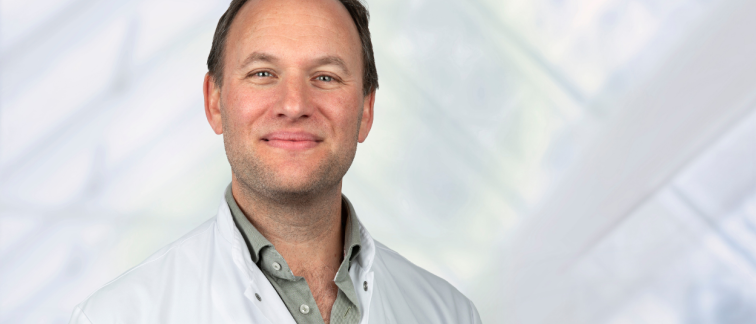
Since 2015, Jonathan Coutinho has worked as a stroke neurologist at Amsterdam UMC, Department of Neurology. In 2014, he earned his PhD on cerebral venous thrombosis (CVT) under the supervision of Prof. dr. Jan Stam. After his residencies, he spent a year at the University of Toronto as a postdoctoral researcher. He has co-authored more than 100 scientific papers on CVT. He is the principal investigator (PI) of the DOAC-CVT study, and he was one of the PI’s of the TO-ACT study and a steering committee member of the RESPECT-CVT, DECOMPRESS-2, and EXCOA studies. Coutinho also co-authored the ESO guideline on CVT. He is an Editorial Board member of Stroke, Journal of Neurology, and Frontiers in Neurology. And additionally, he is one of the Program Leaders of the Neurovascular research program of the Amsterdam Neuroscience research institute.
Coutinho has always been fascinated by neurology, especially acute neurological disorders, and has combined his clinical patient work with the latest scientific research. He feels that this combination helps to make him both a better doctor and researcher.
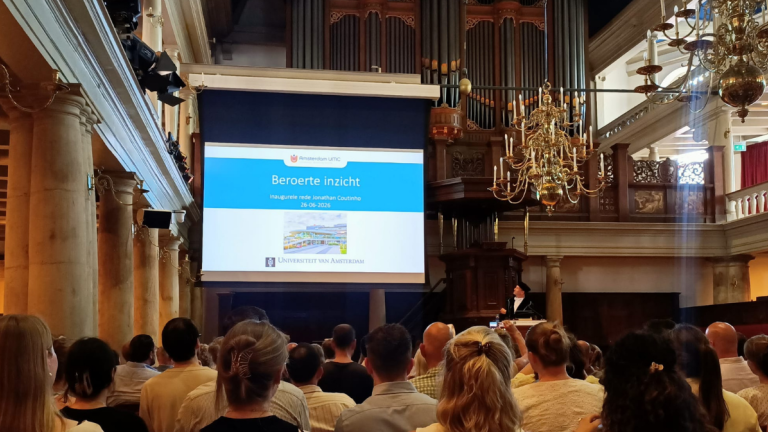
The inaugural lecture ‘Stroke in( )sight’ of Jonathan Couthinho took place on Friday, June 26, 2026, from 16:30 at the ‘Oude Lutherse Kerk’ at Singel 411 as part of the Faculty of Medicine of the University of Amsterdam.
Picture: Anita Edridge