


We will consider proposals that fall within the theme “Organ-to-organ communication”. All research projects (clinical, translational and fundamental) with direct and clear affinity with AGEM are eligible. Applicants with project proposals beneficial to multiple members of the AGEM research institute are especially encouraged to apply.
Organ-to-organ communication
Within the fields of AGEM, the theme “organ-to-organ communication” refers to the coordinated exchange of biochemical, neural, immune, endocrine, and metabolic signals between organs that collectively regulate digestion, nutrient handling, energy balance, and systemic homeostasis. Instead of viewing organs such as the gut, liver, pancreas, thyroid gland, gonads, adipose tissue, muscle, and brain as isolated units, this framework considers them an integrated network whose signaling interactions determine health and disease.
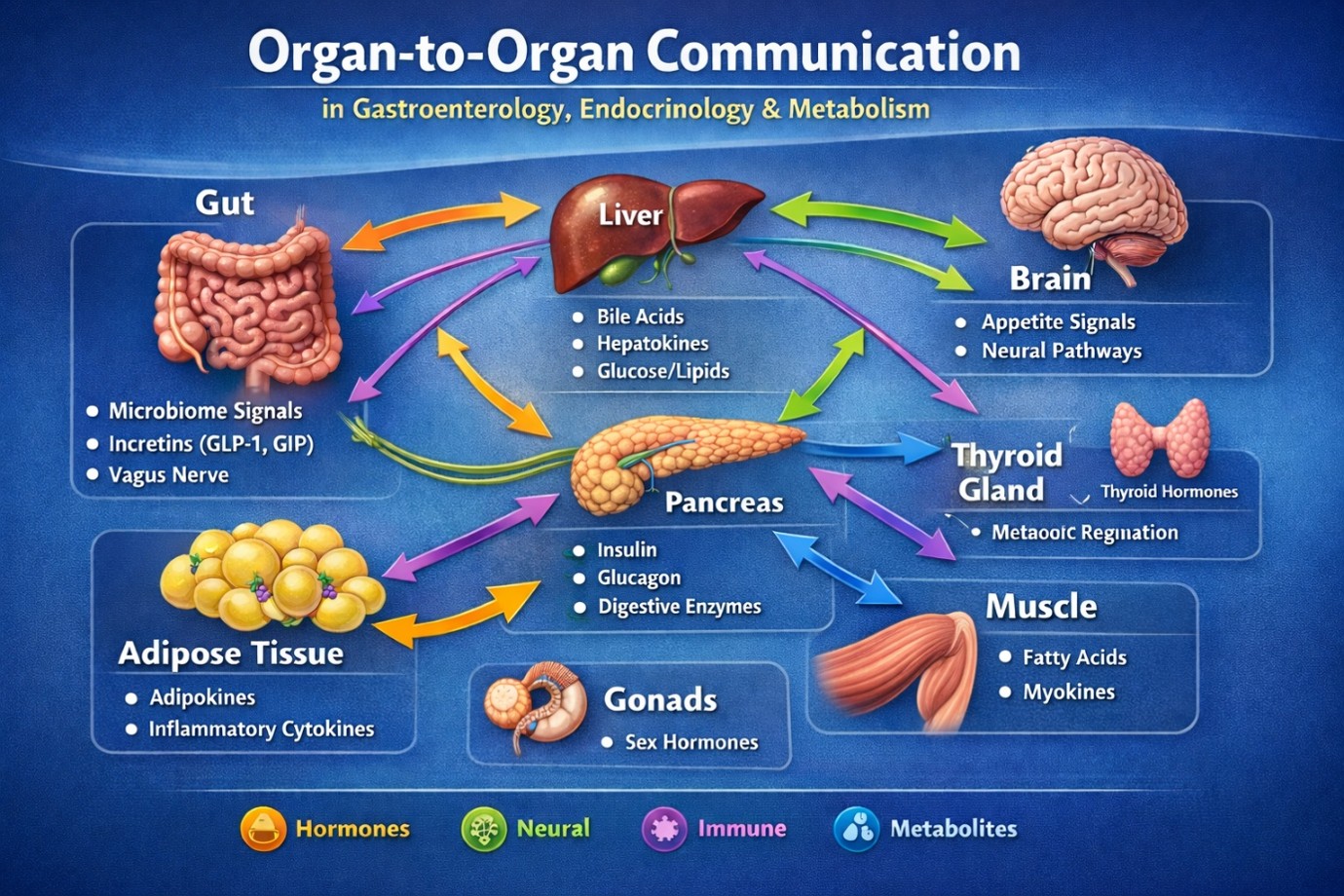
Within gastroenterology, endocrinology, and metabolism, organ-to-organ communication involves several signaling modalities:
- Hormonal and endocrine signaling
Classical endocrine axes regulate metabolism and gastrointestinal physiology, with hormones from one organ acting on distant targets to coordinate nutrient intake, glucose control, and energy storage. - Neural communication and neuroendocrine integration
The autonomic and enteric nervous systems enable rapid bidirectional signaling between the gastrointestinal tract, pancreas, liver, and brain. The gut–brain axis integrates nutrient sensing, appetite regulation, and metabolic control via vagal and sympathetic pathways. - Metabolic substrate exchange and metabolite signaling
Organs communicate through circulating metabolites—such as glucose, lipids, bile acids, lactate, and amino acids—that function as both fuels and signaling molecules linking digestion to systemic metabolic adaptation. - Immune and inflammatory signaling
Cytokines, immune cells, and inflammatory mediators connect organs in health and disease. For example, low-grade inflammation from adipose tissue can alter liver metabolism and contribute to metabolic dysfunction–associated steatotic liver disease (MASLD). - Microbiome-mediated communication
The gut microbiota acts as a metabolic and signaling hub, influencing host organs via microbial metabolites (e.g., short-chain fatty acids and bile acid derivatives), forming key axes such as gut–liver and gut–brain communication.
Eligibility requirements
To be eligible to apply for the AGEM innovation grant:
- The proposal has to be submitted by at least two AGEM applicants (affiliated to AGEM in PURE) who hold a PhD degree, of which one applicant has a permanent contract;
- At least one of the applicants is an AGEM principal investigator (PI);
- The proposed project has to fit into the theme of "Organ-to-organ communication";
- The proposed project should be innovative and not part of an already existing project.
- The applicants need to describe the innovative aspect of their project;
- The project has to start no later than July 1st, 2027.
The budget specification must be per calendar year and the following points must be taken into account:
- Annual allocation of the costs: The budget should specify which costs fall into which calendar year, based on the project’s start and end dates. Reimbursement of expenses will be made based on actual costs incurred per calendar year, which must be invoiced to the grant provider accordingly.
- Departmental distribution of costs: If applicants come from multiple departments, it must be clearly indicated which costs are allocated to which department.
- Financial controller approval: The budget must be prepared in consultation with, and approved by, the financial controller(s)/project controller(s) of the main applicant(s).
- Financial administration route: The financial settlement will always take place via the applicant’s department or via Research BV. Research BV will only be involved if (new) personnel employed by Research BV are (partly) paid from the grant budget. In such cases, the project controller of Research BV must also approve the budget plan.
Verification and approval: Each application must include:
- The name and contact information of the responsible financial controller(s)/project controller(s)
- A signature from the financial controller(s)/project controller(s) confirming that they have reviewed and approved the financial planning.
Application
The application should include:
Application form:
- Personal information
- Proposal (not more than 2 A4)
- Budget allocated by calendar year (see Eligibility requirements), stating the required amount (max €25.000) and explaining how this money will be spent
- Motivation letter of applicants (not more than 1 A4 in total)
- CV of applicants (max 1 A4 per applicant)
- Budget stating the required amount (max €25.000) and explaining how this money will be spent
Application form:
Submission
Please send the application in one combined PDF-file to: agem@amsterdamumc.nl.
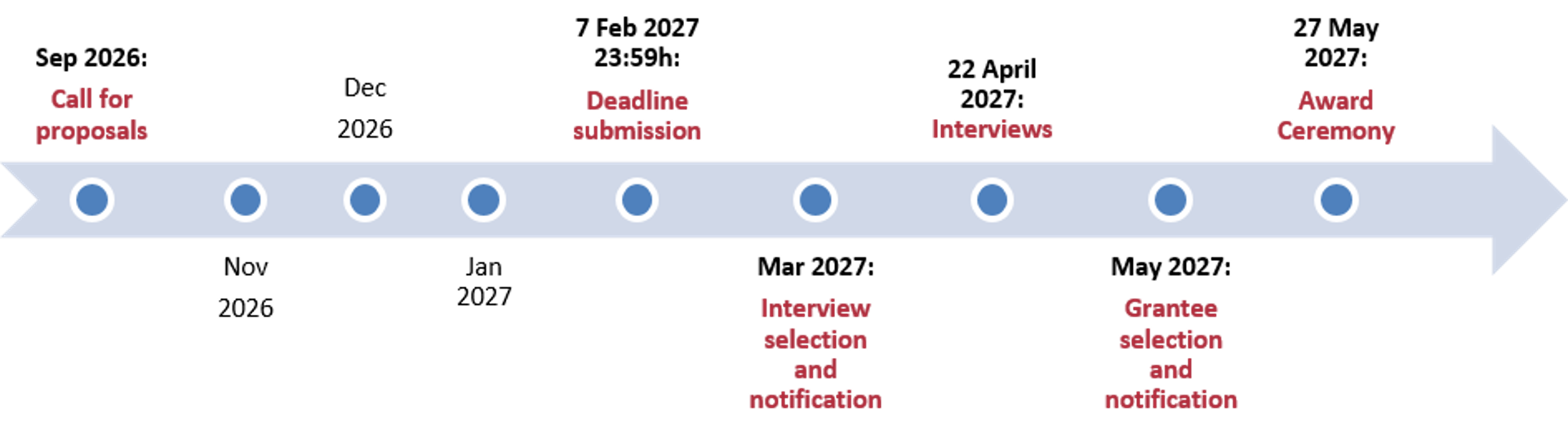
The deadline for submission is: February 7th, 2027; 23:59h.
Incomplete applications and applications submitted after the deadline will not be taken into consideration.
Selection procedure
The AGEM research board will judge the applications on how well the researchers and the proposal fit within the goals and aims of the AGEM research institute.
Nominated applicants will be invited for an interview that will take place on April 22nd, 2027, between 15:30 - 18:30hrs.
Time line
Contact
For questions, please contact AGEM at agem@amsterdamumc.nl.