

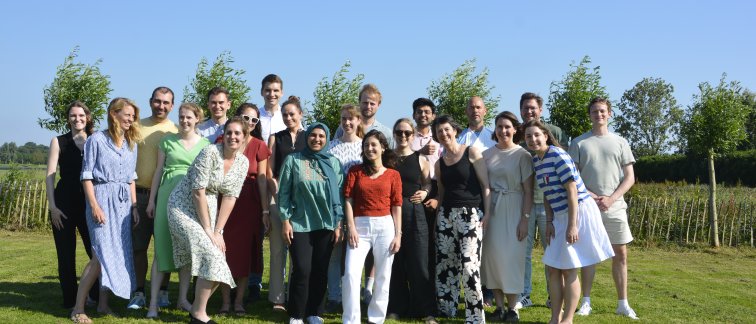
At the Amsterdam institute for Immunology and Infectious diseases (AI&I), we focus our research and outreach on three key themes: Post-Acute Infection Syndrome (PAIS), Immunomonitoring, and Vaccination. Each quarter, we highlight one of these areas through a dedicated series of articles. This quarter (Q4 2025), our spotlight is on PAIS. In this article, we focus on the impact of PAIS research, with special attention to the work of the Dutch Lyme Disease Expertise Center (NLe).
The Dutch Lyme Disease Expertise Center (NLe) is dedicated to advancing the prevention, diagnosis, and treatment of Lyme disease. Through innovative research projects, high-quality patient care, and targeted training for medical professionals, the NLe strives to make a tangible impact. By collaborating closely with all stakeholders and actively incorporating their input, the NLe ensures broad support for its results and products. In recent years, this has led to measurable output such as a diversity of scientific publications (see below) but also a comprehensive handbook and a webcast for general practitioners, providing practical guidance and up-to-date information on Lyme disease. These resources have been shared with all general practitioners and all general practitioners in training in the Netherlands, supporting earlier recognition and better management of Lyme disease in primary care.
Collaboration and expertise
The NLe was established in 2017 and is a partnership between the Dutch Lyme Association, the National Institute for Public Health and the Environment (RIVM), Radboudumc, and Amsterdam UMC. Each partner has specific roles and responsibilities, coordinated through regular consultation. The center focuses on:
- Scientific (clinical) research into Lyme disease
- Specialized tertiary care for patients suspected of Lyme disease or another tick-borne disease
- Education of health care professionals
- The patient perspective and patient participation
As one of the two Lyme disease treatment centers that are part of the NLe, the Amsterdam UMC Multidisciplinary Lyme borreliosis center (AMLC) - founded in 2013 - provides academic, multidisciplinary care for patients with (suspected) Lyme disease. The center evaluates approximately 250-300 new patients annually. In addition to in-person consultations, the center offers the Lyme-line (a dedicated helpline for healthcare professionals) and e-consultations to support general practitioners and medical specialists with questions about Lyme disease, providing advice for an additional 250–300 patients each year. The team works closely with microbiologists (Dutch Reference Laboratory for Borrelia), neurologists, rheumatologists, dermatologists and pediatricians to ensure comprehensive diagnostics and care.
In response to findings from a patient experience and satisfaction survey, as well as discussions with patient representatives, a dedicated nurse specialist was appointed to serve as case manager and primary point of contact for both patients and healthcare professionals. Similarly, as many of the patients suffer from problems at work, a dedicated occupational health physician is now part of the AMLC team.
Current research project: understanding PTLDS
Clinical care is closely integrated with research: all patients are asked for consent to use their anonymized data for research purposes, contributing to a uniform patient registry and classification system, and, where permitted, biobanking of patient samples. This biobank is completely harmonized with the biobank at Radboudumc and the data and samples from many hundreds of participants will proof highly valuable for future scientific research. Dr. de Stoppelaar, internist-infectiologist and part of the center’s core clinical team: ‘By analyzing this combined dataset, we hope to gain deeper insights into the biological factors underlying post-treatment Lyme disease syndrome (PTLDS), ultimately leading to improved patient management and treatment options’. Dr. de Stoppelaar’s ambitions do not stop at the Dutch borders: ‘We are about to submit an HORIZON-application with 14 European and one U.S.-partners focusing on chronic symptoms associated with Lyme disease’.
This proposal elaborates on the biobank and previous research efforts, including:
- The LymeProspect Study. This large-scale study, conducted with RIVM, Radboudumc, and Amsterdam UMC, revealed that about 5% of Lyme disease patients develop PTLDS despite recommended antibiotic therapy (Ursinus et al., 2021).
- Determinants of Persistent Symptoms. Follow-up research by the same consortium identified that persistent symptoms are mainly linked to general factors such as baseline functioning, initial symptoms, and cognitive-behavioral responses, rather than Lyme-specific factors (Vrijmoeth et al., 2023). In-depth analyses of the LymeProspect cohort have provided new knowledge about immunogenetic susceptibility and cytokine responses in Lyme disease (Botey-Bataller et al., 2024; Vrijmoeth et al., 2024).
- . The ongoing LymeProspect PLUS and KIDS studies are assessing the long-term impact of PTLDS (6–10 years after diagnosis) and the effects in children.
- The Victory study. This study, coordinated by Amsterdam UMC and performed by the above-mentioned consortium, demonstrated that so-called “cellular tests” used abroad are not reliable for Lyme disease diagnostics in its current form (Baarsma et al., 2022).
A key strength of all these projects is the active involvement of patient representatives throughout the projects, ensuring that research addresses real-world needs and priorities. The results of these studies are already informing the update of the Dutch national Lyme disease guideline, helping to improve care and outcomes for patients across the country.
PAIS: Post-Acute Infection Syndrome
Post-Acute Infection Syndrome (PAIS) is an umbrella term for persistent or recurring symptoms that continue after the resolution of an acute infectious illness, such as fatigue, cognitive impairment (“brain fog”), shortness of breath, musculoskeletal pain, and sleep disturbances. PAIS includes well-known post-infectious syndromes such as post-COVID, PTLDS and Q fever fatigue syndrome. Bacterial infections like pneumonia or sepsis can also result in long-term symptoms. The underlying pathophysiology remains incompletely understood, but current research points to a complex interplay of sustained immune activation, viral persistence, ongoing inflammation, dysautonomia, and autoimmunity.
Collaborative and multidisciplinary approach
The NLe works closely with the two largest Dutch Lyme patient organizations. During quarterly meetings, both parties exchange insights that help guide and shape the research project. ‘We also maintain close contact with fellow infectious disease physicians and researchers working on post-COVID syndrome, sharing knowledge and ideas about potential shared underlying mechanisms between PTLDS and post-COVID’, dr. de Stoppelaar adds. In addition, the NLe collaborates with colleagues in occupational medicine, neurology, pediatrics, dermatology, and they aim to involve experts from the social sciences and humanities to broaden their perspective and approach.
Ecological advice
An interesting aspect of the multidisciplinary approach of the NLe is the collaboration with biologists at the RIVM, who provide valuable advice on environmental management and public health. For example, they offer guidance on how increasing the number of sheep in heathland areas can help control vegetation, or how allowing grass to grow, while beneficial for flowers and insects, may also increase the risk of tick spread. These insights help balance ecological benefits with the need to reduce tick-borne disease risks, illustrating how expertise from different fields comes together to inform both patient care and prevention strategies.

Photo credit: Marjolein Annegarn
Discover more articles in this series:
Text: Esmée Vesseur, Sacha de Stoppelaar and Joppe Hovius