

World AMR Awareness Week (1/3): What is AMR?
From 18 to 24 November, it is World AMR Awareness Week (WAAW). Under this year's theme, "One Health, one action: Prevent AMR now", we are publishing a series of three articles on antimicrobial resistance (AMR). In this first article, dr. Henk Schallig explains what AMR is, how it develops, and why it is called a silent pandemic. Dr. Schallig is a principal investigator and parasitologist at the Laboratory for Experimental Parasitology, Department of Medical Microbiology and Infection Prevention at Amsterdam UMC, and topic leader of the 'Vector-borne & Tropical Infections' topic within the Infectious Diseases program of the Amsterdam institute for Immunology and Infectious Diseases.
What is antimicrobial resistance, in simple terms?
Antimicrobial resistance occurs when microbes, such as bacteria or parasites, become insensitive to medicines that are used to kill them or stop them from growing. Drugs that were commonly used to treat infections caused by pathogens no longer work: the microbes have become resistant.
How does resistance develop, and why is it spreading so fast?
Resistance is an adaptation, often caused by changes in the genetic material of pathogens, that arises through the incorrect use of antimicrobials. This incorrect use can result from a wrong diagnosis, for example, when an antimicrobial is prescribed for a disease that does not require antibiotic treatment (overprescription), or from under-treatment, when people stop taking their medication prematurely because they feel better, even though the infection has not yet completely cleared. Resistance can also occur naturally, for example when bacteria develop genetic changes (mutations) that make them resistant to certain antibiotics.
The reason resistance is spreading so fast is simple: too many antimicrobials are being used incorrectly worldwide. An estimated 50 billion doses are used globally each year (1), and about 30% of all antimicrobials used worldwide are used inappropriately (2). For example, a febrile infection is treated as malaria when it is in fact a simple cold. In addition, we see massive "preventive" use of antibiotics.
How big is the problem, and why is AMR called a "silent pandemic"?
AMR is now considered one of the biggest global public health threats. At least 1.3 million people die each year from bacterial infections alone that can no longer be treated effectively due to resistance (3). If fungal and parasitic infections are included, the number is even higher, and the numbers are still increasing. The World Health Organization predicts that AMR could directly cause approximately 39 million deaths cumulatively between 2025 and 2050 (4).
It is called a silent pandemic because resistant pathogens can spread between humans, animals and the environment without being noticed immediately. And it occurs everywhere: it is truly global.
Key news from the Schallig lab:
€2.7 Million for PATHFINDER | Petra Mens and Henk Schallig:On 1 October 2026, the Laboratory of Experimental Parasitology (Medical Microbiology & Infection Prevention), led by Dr. Petra Mens and Dr. Henk Schallig, launched PATHFINDER, a project funded by a €2.7 million grant from EDCTP3 (EU). The project is carried out in collaboration with Imperial College London (coordinator), the University of Ghana (Accra), the Clinical Research Unit Nanoro of the Institut de Recherche en Sciences de la Santé (Ouagadougou, Burkina Faso – scientific lead), and ProtonDx, a UK-based company specializing in innovative diagnostics.
Global Health EDCTP3 EU Partnership Grant | Henk Schallig: Dr. Henk Schallig and his team have secured a €5 million from the EDCTP3 EU Partnership to launch the Safety of Antimalarials in the FIrst tRimEster (SAFIRE) project in Kisumu, Kenya. SAFIRE marks the first-ever Phase 3 clinical trial to evaluate the efficacy and safety of antimalarials in women during the first trimester of pregnancy.
What aspect of AMR do you focus on in your research at Amsterdam UMC?
Our research is carried out in close collaboration with research groups in low- and middle-income countries, such as Burkina Faso and the Democratic Republic of Congo. In these settings, we study how we can improve the diagnosis of the cause of fever, and we develop better tools for this. Is it malaria, or another infection? And how should this infection be treated? We have seen that many diagnoses are incorrect, due to the unavailability of appropriate diagnostic tools, and that a wrong diagnosis too often leads to the wrong use of antimicrobials, thereby increasing resistance. As a result, in some of our study sites in Burkina Faso, antibiotics are less than 50–90% effective against common bacterial diseases.
Resistance against anti-malarial drugs is also rising. In the past, we have lost effective drugs such as chloroquine due to resistance. Currently, artemisinin-based combination therapy (ACT) is the core of malaria treatment. However, there are signals that resistance against these ACTs is increasing. We are conducting molecular surveys in several African countries to inform health authorities about the potential rise of resistance.
What do you hope to achieve in the future?
A world without resistance would be too much to ask for, given that resistance occurs naturally to a certain extent. But contributing to correct prescription, through appropriate diagnosis, and increasing the appropriate use of antimicrobials would be a very good start.
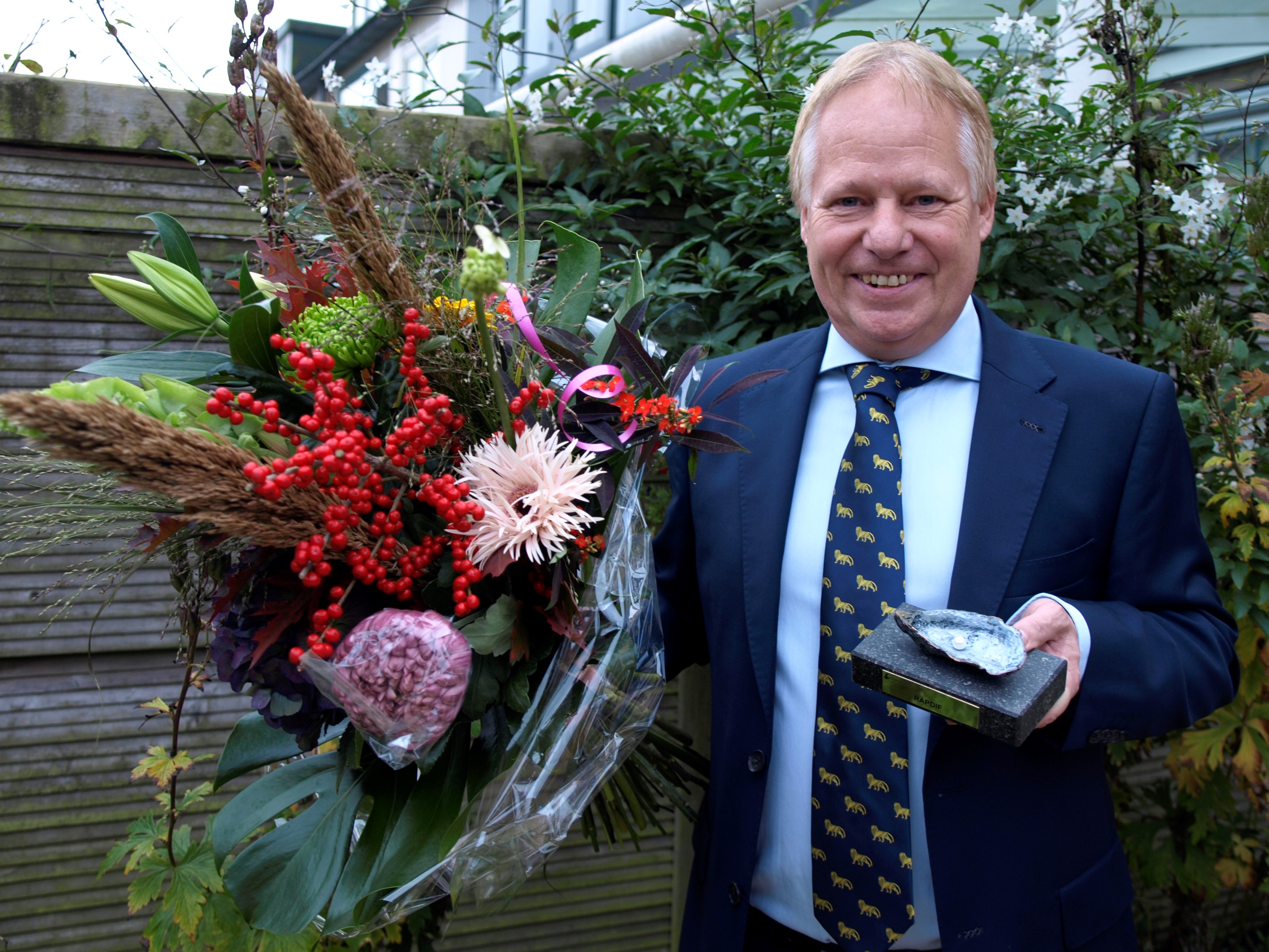
In 2020, ZonMw awarded a Parel to dr. Henk Schallig for the RAPDIF study, which developed better tools and knowledge for tackling fever and malaria in Africa.
Text: Henk Schallig and Esmée Vesseur
This is the first article in a series of three. On Friday 20 November we look at the development of new antibiotics, and on Monday 23 November, we explore alternatives to antibiotics, as part of World AMR Awareness Week (WAAW, 18–24 November).
Reference list
1 Klein, E. Y., Impalli, I., Poleon, S., Denoel, P., Cipriano, M., Van Boeckel, T. P., ... & Nandi, A. (2024). Global trends in antibiotic consumption during 2016–2023 and future projections through 2030. Proceedings of the National Academy of Sciences, 121(49), e2411919121. https://doi.org/10.1073/pnas.2411919121
2 Mulchandani, R., Tiseo, K., Nandi, A., Klein, E., Gandra, S., Laxminarayan, R., & Van Boeckel, T. (2025). Global trends in inappropriate use of antibiotics, 2000–2021: scoping review and prevalence estimates. BMJ Public Health, 3(1). 10.1136/bmjph-2024-002411
3 Murray, C. J., Ikuta, K. S., Sharara, F., Swetschinski, L., Aguilar, G. R., Gray, A., ... & Tasak, N. (2022). Global burden of bacterial antimicrobial resistance in 2019: a systematic analysis. The lancet, 399(10325), 629-655. 10.1016/S0140-6736(21)02724-0
4 World Health Organization. (2025, 7 oktober). Global call to action to address antimicrobial resistance. https://www.who.int/publications/m/item/global-call-to-action-to-address-antimicrobial-resistance