

Would you agree to be deliberately exposed to an infection for scientific research? Or walk around for days with ticks attached to your skin to advance medical knowledge?
Controlled Human Infection Models (CHIMs) ask healthy volunteers to do exactly that. While these studies accelerate vaccine and treatment development, they also raise an important question: Why do healthy individuals choose to expose themselves to controlled infection, and how is this ethically justified?
The perspectives presented in this article are based on interviews with three healthy volunteers who participated in CHIMs. Two took part in the tick challenge model at Amsterdam UMC, and one participated in a COVID-19 CHIM after connecting with the volunteer organization 1DaySooner. All participants were asked similar questions about their motivations, experiences, perceptions of risk, ethical considerations, and willingness to participate in future studies.
CHIMs: controlled infection in a clinical research setting
Controlled Human Infection Models (CHIMs) are used to study infectious diseases in a safe and controlled setting. In these studies, healthy adult volunteers are deliberately exposed to a well-characterized pathogen, allowing researchers to see how infections develop and better understand how the body responds (1). This could help in developing new interventions to better diagnose a disease or prevent a disease. Before participation, volunteers undergo thorough screening and an informed consent procedure to make sure they are healthy and understand all the risks and benefits of participation (2,3). If they are found willing and suitable to participate, they are then exposed to the pathogen under strictly controlled conditions (4,5). After exposure, participants are closely monitored for clinical symptoms, and their immune responses are tracked over time (6,7). Clear protocols ensure that any signs of illness can be treated quickly and safely (8). A key advantage of CHIMs is the speed at which results can be generated and (new) interventions can be tested. Because exposure is precisely controlled, researchers can study early infection stages in detail and evaluate treatments or vaccines more efficiently than in traditional studies (9).
Yet even under these controlled conditions, a central ethical tension remains: healthy people are intentionally exposed to potential harm in order to advance medical science.
Why volunteers participate in CHIMs
Although the idea may initially sound unorthodox, participants describe their decision as strongly connected to a sense of social responsibility, curiosity, and the desire to contribute to science. One volunteer who participated in a COVID-19 CHIM explained that his motivation emerged during the pandemic itself:
“In the context of the global pandemic, I saw how many people were suffering. I was young and healthy, and I felt lucky to be in a position where I could help.”
At that time, he was a student and felt he had the flexibility to participate. After seeing an advertisement for the CHIMs, he signed up immediately. Similar motivations are reflected in organizations such as 1Day Sooner, an independent advocacy group established during the COVID-19 pandemic. This organization provides information about ongoing research, connects volunteers with research teams, and advocates for participant interests. It also engages with policymakers and regulators on topics such as vaccine policy, biosecurity, public health, and research ethics. Central to its mission is the idea that volunteers are not only research subjects, but also stakeholders whose participation contributes to scientific and societal progress. Reflecting the altruism of healthy volunteers, 1Day Sooner supports CHIMs as a way to speed up and improve the development of vaccines and treatments for infectious diseases, ultimately aiming to reduce global suffering caused by these diseases. The organization places strong emphasis on ethical study design, transparency in clinical research, and the responsible use of participant contributions (10,11).
For some volunteers, participation is also connected to a broader belief about civic responsibility during public health crises:
“It felt like my duty to take a bit more risk and contribute during the pandemic.”
Case study: The Tick Challenge Model at Amsterdam UMC
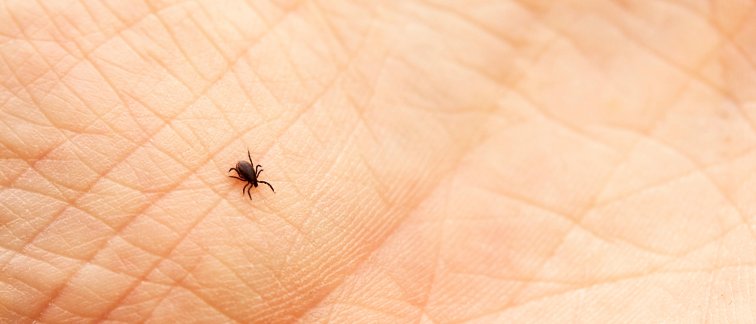
Amsterdam UMC recently developed a novel CHIM, which studies the immune response to uninfected tick bites. Unlike classical CHIMs, this model exposes volunteers to a vector instead of a pathogen. This model is set up to study the concept of acquired tick resistance, where repeated exposure to ticks is thought to lead to an immune response that reduces the ability of ticks to feed and transmit pathogens such as Borrelia, which can cause Lyme disease. The ticks are carefully grown in the laboratory and tested negative for known human pathogens. After screening, the ticks are placed on the skin of volunteers. Volunteers are exposed to ticks for multiple days. During this period, researchers perform repeated blood sampling, clinical assessments, and skin biopsies to study local and systemic immune responses (12). Even in models designed to mimic natural exposure, the question remains: what motivates someone to voluntarily participate in such an unusual experiment?
For one participant, the decision to take part is driven by curiosity and a willingness to contribute. She described how her interest was first sparked by seeing it online:
“I remember seeing something online about a woman taking part in a tick study and I thought I can do that”.
When she later saw a call for participants, she applied immediately. With a background in science, she was motivated both by curiosity and by the opportunity to contribute more directly, rather than working behind the scenes. Although the study required repeated visits over time, she described this as manageable. The time commitment was something she anticipated in advance and incorporated into the routine, rather than experiencing it as a burden. Despite the unusual nature of the study, this participant reported no hesitation before taking part. She felt confident in the safety measures and the use of laboratory reared ticks contributed to that reassurance. She noted that her decision might have been different if the risks were less controlled or more uncertain.
She added that she would readily participate in a similar study again. Looking back, the participant described her experience as both positive and meaningful:
“I really enjoyed taking part. It feels great to be able to contribute, like wow, I can actually do something”.
A second participant described a more spontaneous motivation for joining the study. After hearing about the tick challenge model through a friend and seeing posters at the hospital, he decided to participate together with fellow students. Although the idea initially sounded unusual, he described the experience as interesting and worthwhile. Trust in the scientific setting played an important role in his decision making. While he recognized that risks were present, he considered them limited and well controlled.
“The risks did not feel very high to me. I trusted the science behind it.”
As a student, he also found the practical aspects easy to integrate into daily life. He further highlighted the positive experience with the research team:
“Everything was explained clearly in advance, and nothing felt rushed. All information was discussed in detail.”
For these volunteers, trust in the researchers and confidence in the safety procedures appeared to play a major role in how they evaluated and accepted the risks involved.
Balancing risk and responsibility
Despite their scientific value, CHIMs raise important ethical questions. Unlike most clinical research, they involve deliberate exposure to infection or vectors (13). According to the World Health Organization (WHO), CHIMs are only ethically acceptable when the pathogen is well characterized, and risks can be carefully controlled. They may be justified when they offer the most efficient way to answer an important research question or speed up vaccine and treatment development (8). This balance between scientific value and participant safety is what makes CHIMs ethically controversial. While participants often viewed the risks as acceptable, not everyone agrees that individual willingness alone is sufficient to justify deliberate infection studies. Organizations including the WHO have helped develop frameworks to guide their safe use. Still, this leaves a difficult ethical dilemma: when does potential societal benefit outweigh the risks taken by healthy volunteers?
One volunteer from the Tick challenge model explained:
“During the first consultation, they took a lot of time to explain the risks. I also received information beforehand, so I could read everything carefully.”.
A participant in the COVID-19 CHIM described a similar structured process:
Together, these experiences show how informed consent in CHIMs is supported through multiple layers of communication, including written information, personal consultations, and repeated opportunities to ask questions. Participants also reflected on risk perception:
"There is always a chance of medical harm, so it should be done carefully and only when necessary. But I believe people can consent to this level of risk.”
Compensation is another ethical consideration, as it raises questions about whether financial incentives may influence decision-making (8,14). Ethical guidelines therefore emphasize fair but not excessive compensation. All volunteers interviewed received financial compensation for participating. While they acknowledged that compensation was appreciated, it was not described as their primary motivation to take part in the CHIM, reflecting previous research showing that participation is motivated by a combination of factors rather than financial reward alone (15).
Public reactions to participation of the volunteers also appeared mixed:
“Not everyone understood it. Some people thought it sounded silly or dangerous, while others were very supportive because it matched my values.”
"My friends thought it was funny and unusual, and my parents were fine with it. Some had more concerns because you carry the ticks with you all day."
These divided reactions reflect the broader societal debate surrounding CHIMs. Some people view participation as altruistic and valuable, while others question whether any scientific benefit can justify intentionally exposing healthy individuals to any form of risk.
Volunteers and the future of CHIM research
For many volunteers, participation in CHIMs does not end after a single study. The participant who initially joined a COVID-19 CHIM later volunteered for additional COVID-19 studies and eventually participated in a tuberculosis vaccine trial as well. He described his motivation as a strong desire to contribute during a global health crisis. Beyond participating in research itself, the experience even inspired the participant to start a fundraiser for UNICEF’s COVAX initiative, aimed at improving global vaccine access.
Together, these experiences show that participation in CHIMs is rarely driven by a single motivation. Curiosity, trust in science, and a sense of social responsibility often intersect in the decision to take part. Their stories do not resolve the ethical questions surrounding deliberate exposure studies, but they do add an important perspective. Behind every discussion about risks, regulations, and scientific value are individuals who carefully weigh those considerations for themselves. Understanding why people are willing to participate may be just as important as understanding the diseases themselves in advancing prevention and treatment of infectious diseases.
Text: Charlotte Vriesema. This essay was written as part of the course Study and Career Year 2 of the MSc in Biomedical Sciences with a focus on Infectious Diseases at the Vrije Universiteit Amsterdam.
Future of CHIM research at Amsterdam UMC
The future of CHIMs at the Amsterdam Institute for Immunology and Infectious Diseases starts now with the research project of prof. Hovius. The team of Prof. Hovius has set up the uninfected tick challenge model at the Amsterdam UMC.
Prof. Hovius has now been awarded an NWO Impact Explorer grant for the project titled: Challenging Lyme disease: exploring societal and ethical pathways for a controlled human Borrelia infection model. This project will explore the potential of a controlled human Borrelia infection model to accelerate research on diagnostics and interventions. Developing such a model raises complex ethical, societal, and scientific questions. Together with impact partners 1DaySooner and INFECTA, prof. Hovius will conduct a structured multi-stakeholder analysis involving researchers, clinicians, ethicists, regulators, and participants. The project will deliver a practical roadmap outlining the necessary requirements for the responsible development of a controlled human Borrelia infection model, thereby maximizing societal impact.
Titel
Reference list
- The Academy of Medical Sciences. Controlled human infection model studies [Internet]. London: The Academy of Medical Sciences; 2018 [cited 2026 Apr 18]. Available from: https://acmedsci.ac.uk/policy/policy-projects/controlled-human-infection-models
- Radboudumc Community for Infectious Diseases. Controlled human infection models [Internet]. Nijmegen: Radboud University Medical Center; [cited 2026 April 18]. Available from: https://www.radboudumc.nl/en/radboudumc-community-for-infectious-diseases/research/controlled-human-infection-models
- MacLennan CA, Riddle MS, Chen WH, Talaat KR, Jain V, Bourgeois AL, et al. Consensus report on shigella controlled human infection model: Clinical endpoints. Clin Infect Dis. 2019 Dec 9;69(Suppl 8):S591-S595.
- Centre for Human Drug Research (CHDR). Controlled human infection models [Internet]. Leiden: CHDR; [cited 2026 April 20]. Available from: https://chdr.nl/methods-challenges/controlled-human-infection-models.
- Choy RKM, Bourgeois AL, Ockenhouse CF, Walker RI, Sheets RL, Flores J. Controlled human infection models to accelerate vaccine development. Clin Microbiol Rev. 2022 Sep 21;35(3):e0000821.
- Porter CK, Detizio KJ, Maier N, Testa KJ, Talaat KR, Chen WH, et al. A site assessment tool for inpatient controlled human infection models for enteric disease pathogens. Clin Trials. 2022 Feb;19(1):116-118.
- Mack AG, Halperin DM, Selig BM, Condran BR, Halperin SA. Exploring the participant experience in controlled human infection model (CHIM) trials: A modified grounded theory study. PLoS One. 2025 Aug 6;20(8):e0328378.
- World Health Organization. WHO guidance on the ethical conduct of controlled human infection studies. Geneva: World Health Organization; 2021 Jan 14.
- INFECTA/ Controlled human infection models (CHIMs) [Internet}. Leiden:INFECTA; [cited 2026 April 22]. Avialbale from: https://infecta.org/chims/.
- 1Day Sooner. 1Day Sooner [Internet]. [cited 2026 Apr 20]. Available from: https://www.1daysooner.org/
- Zimmer-Harwood P. Research Lead, Clinical trials of 1DaySooner. 2026 April 14.
- Amsterdam UMC. TICK ME onderzoek [Internet]. Amsterdam: Amsterdam University Medical Center; [cited 2026 April 19]. Available from: https://www.amsterdamumc.nl/nl/zorg/tick-me-onderzoek.
- Jamrozik E, Selgelid MJ. Ethical issues surrounding controlled human infection challenge studies in endemic low-and middle-income countries. Bioethics. 2020 Oct;34(8):797-808.
- Nuffield Council on Bioethics. The ethics of research related to healthcare in developing countries. London: Nuffield Council on Bioethics; 2002. Available from: Full report (PDF)
- Hoogerwerf MA, de Vries M, Roestenberg M. Money-oriented risk-takers or deliberate decision-makers: a cross-sectional survey study of participants in controlled human infection trials. BMJ Open. 2020 Jul 26;10(7):e033796.