


The KWF Young Investigator Grant supports promising researchers at an early stage of their scientific careers, helping them establish an independent research line in oncology and strengthening the future of high-quality cancer research in the Netherlands. Recently, two talented CCA researchers were awarded a Young Investigator Grant: Sofía Ibáñez Molero and Michaël Noë. We asked them three questions about their research, their careers at CCA and what receiving the grant means to them.
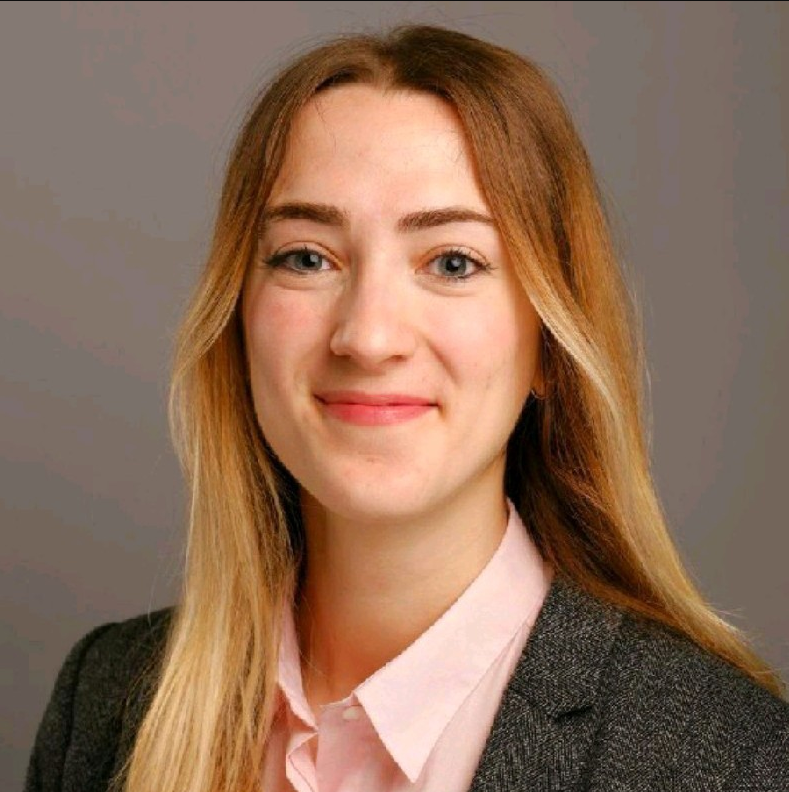
1. What motivates you most about this research?
Over the past years, immunotherapy has transformed the treatment of several cancers, but unfortunately, this success is not shared across all cancer types. Gastric cancer is one example, where only a fraction of patients experience a lasting response. I am fascinated by the cellular mechanisms that prevent the immune system from effectively fighting these tumors.
Our work has shown that the tumor-associated glycan Sialyl-Tn (STn) is linked to patient prognosis in gastric cancer. We now want to understand how this seemingly small molecular feature can reshape the tumor microenvironment and influence the ability of immune cells to kill tumor cells.
Ultimately, this could help us identify patients in whom STn contributes to immunotherapy resistance and potentially uncover new ways to improve their treatment.
2. What would you say to other young researchers who are considering building their research career at CCA?
CCA offers a highly collaborative and supportive environment where new ideas can really flourish. I have particularly appreciated the strong internal support for developing and refining grant applications. The internal review process for grants such as the KWF Young Investigator Grant was extremely valuable and helped strengthen my proposal.
CCA offers a highly collaborative and supportive environment where new ideas can really flourish.
CCA has also given me access to the technologies, expertise and clinical collaborations I need to turn research ideas into feasible projects. That combination of scientific expertise and a strong collaborative network has been incredibly important for developing my research.
3. What went through your mind when you heard that you had been awarded the Young Investigator Grant?
It was an incredibly exciting moment! More than recognition of the work I have done so far, the grant feels like the starting point of my own research programme.
It has given me an extra boost of motivation—not only to answer the questions at the heart of this project, but also to think about the next questions that could follow. I am very excited about where this research can take us and about building my own research line around these ideas.

1. What motivates you most about this research, and why is this question important to you?
Pancreatic cancer is still one of the few cancers where we almost always arrive too late. IPMNs are the exception: they are cystic precursors to pancreatic cancer (similar to polyps in the colon) that we can actually see on imaging, sometimes years before cancer develops. That is a rare opportunity, and at the moment we are not using it well.
Today, we largely rely on imaging features to decide who goes to surgery. That leads to two kinds of failure, and I see both. Some patients undergo a pancreatoduodenectomy—a major operation with real mortality and lifelong consequences for digestion and blood sugar—for a cyst with only low-grade dysplasia that would never have harmed them. Other patients remain under surveillance until they develop an invasive cancer we can no longer cure.
As a pathologist, I look at these lesions under the microscope after the patient has already undergone surgery, and I keep thinking: this information existed beforehand. Sequencing the DNA and DNA methylation in the cyst fluid gives us a way to read it. If we can distinguish high-grade dysplasia and early cancer from low-grade disease, we can operate on the patients who need it and spare those who do not.
2. What would you say to other young researchers who are considering building their research career at CCA?
The central principle of my career has been simple: seek out the best people in your field and find a way to work with them. That rule has driven every major move I’ve made. I left Belgium for my pathology residency in the Netherlands to train at the forefront of pathology and molecular diagnostics. I moved to Johns Hopkins University for my PhD and postdoc to learn from world leaders in pancreatic precursors and liquid biopsies. Most recently, I joined Amsterdam UMC and CCA—Europe’s largest pancreatic cancer center—because of its clinical and research expertise, collaborative culture and volume.
Relocating and starting over carries a real cost, but surrounding yourself with excellence elevates your standards. I had submitted several grants elsewhere without success. Winning this grant—my first successful award—is a direct result of finding the right environment.
When launching your own research, expertise alone isn't enough. You also need mentors and colleagues who believe in your potential, which I found at CCA. High expectations paired with genuine support can create the Pygmalion effect: expectations help drive achievement and turn ambitious ideas into real momentum.
Winning this grant—my first successful award—is a direct result of finding the right environment.
3. What went through your mind when you heard that you had been awarded the Young Investigator Grant?
Relief first—an embarrassing amount of it. Writing a grant of this scale takes a long time, often carved out of evenings and weekends alongside my full-time work as a pathologist. Success rates are brutally low, and you spend a long time in limbo wondering whether your idea will ever see the light of day.
Then, almost immediately, the weight of responsibility set in. A million euros over several years is a major commitment from KWF, backed by ordinary people who donated their own money to fight cancer. That funding carries a deep obligation to conduct this research with absolute rigor.
My focus is to establish a reliable, standardized reference that can serve as the foundation for a clinical molecular test—one that clearly tells surgeons whether a patient truly needs an operation.