

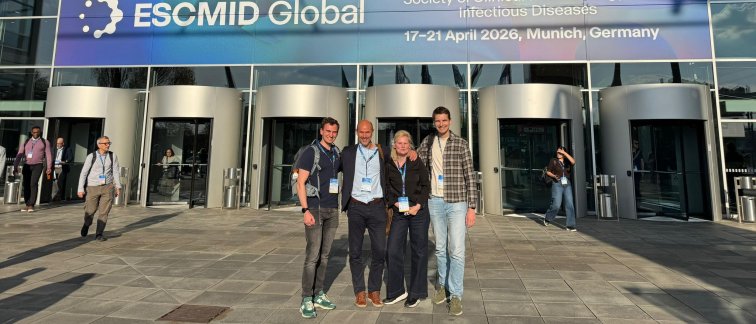
ESCMID Global is the world’s premier congress for Clinical Microbiology and Infectious Diseases, bringing together over 16,000 international experts. This year, AI&I members were once again actively involved, contributing to discussions, presentations, and collaborations that shape the future of our field.
ESCMID Global 2026 once again brought together the international infectious diseases community to share the latest advances in clinical practice, microbiology, and translational research. The programme featured a strong line-up of keynote lectures and scientific highlights, addressing both cutting-edge discoveries and the pressing global challenges facing our field.
Several overarching themes stood out. First, the continued impact of global changes, including climate change, mobility, and demographic shifts, on the epidemiology of infectious diseases. Second, the increasing complexity of patient populations, particularly in the context of immunosuppression and multimorbidity, requiring more tailored and interdisciplinary approaches to care. Third, the growing importance of integrating clinical research, microbiology, and data science to improve diagnostics, treatment, and prevention.
Keynote sessions reflected these developments, with a strong focus on emerging infections, antimicrobial resistance, and the evolving interaction between pathogens and host immunity. The program also highlighted the need for scalable solutions, from novel diagnostics and vaccines to implementation strategies that can be applied across diverse healthcare settings.
AI&I presentations and contributions
AI&I was well represented with a range of impactful presentations and posters:
Prof. Joost Wiersinga delivered a talk on "The new Surviving Sepsis Campaign guidelines 2026."
Prof. Joppe Hovius presented on human tick challenge studies and anti-tick vaccines.
Prof. Martin Grobusch co-led a workshop on travel, migration, and immunosuppression during Educational Friday, and chaired a session on malaria molecular markers.
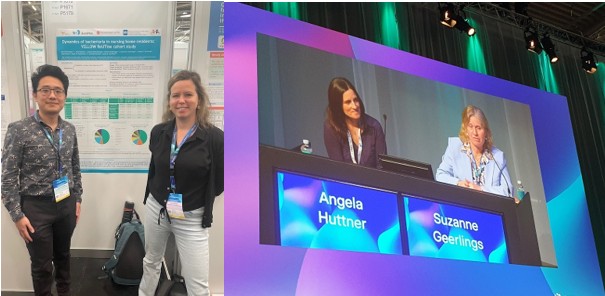
Prof. Suzanne Geerlings chaired the ‘UTIs off the beaten path: complex patients, complex choices’ session together with Prof. Angela Huttner from Geneve.
PhD-candidate Jelmer van Lieshout presented a poster on the Lyme disease biobank, which was rated in the top 2%.
PhD-candidate Philip Elders gave a poster pitch on the environmental impact of intravenous antibiotics.
PhD-candidate Anouk Overdevest presented findings showing that just one day of antibiotics after successful drainage for cholangitis is sufficient.
PhD-candidate Oren Turgman delivered an oral presentation on "Real-world longitudinal validation of high-income-country-derived sepsis endotypes in sub-Saharan Africa: a nested prospective multicenter study."
PhD-candidate Ruochen Wang presented the results of the YELLOW RoUTIne study,, showing that most nursing home residents have bacteriuria over a one-year follow-up period, with Escherichia coli being the most prevalent isolate.
Translating science into practice
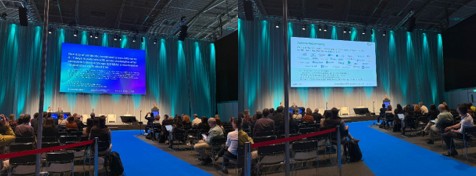
A particularly striking aspect of this year’s congress was the emphasis on translation: from fundamental insights into host–pathogen interactions to real-world implementation in clinical practice. This aligns closely with the mission of the Amsterdam Institute for Immunology and Infectious Diseases (AI&I), where we aim to connect clinical expertise with cutting-edge research to drive impact for patients.
Prof. Joppe Hovius, Director of AI&I, commented: ‘ESCMID Global clearly shows how rapidly our field is evolving. The real challenge now is to translate these advances into better care for patients, and that requires close collaboration between clinicians, researchers, and public health experts.”
Meetings like ESCMID Global are essential not only for sharing knowledge, but also for building collaborations and shaping the future direction of the field. The breadth of topics and the quality of the discussions underscore the importance of continued investment in infectious diseases research and innovation.
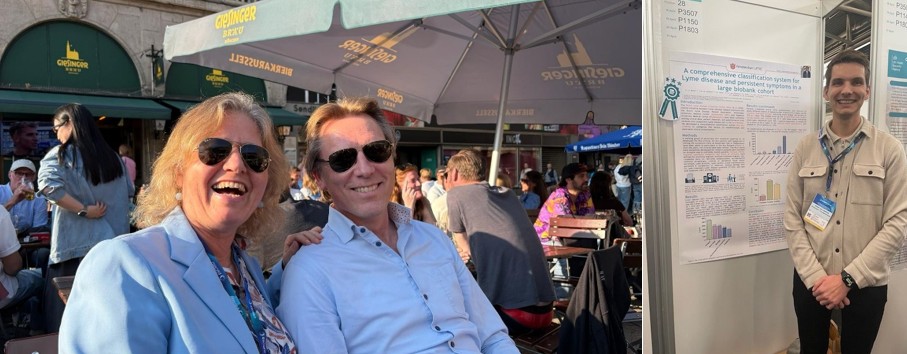
We are proud of the AI&I community’s engagement at ESCMID Global 2026 and look forward to translating these insights into innovative research, clinical care, and collaborative initiatives within AI&I, Amsterdam UMC and beyond.