Falling birth rates and ageing populations are reshaping societies worldwide, creating urgent challenges for economies, healthcare systems, and social structures. As global populations grow older and fewer children are born, the pressure on labour markets, pensions, and public health systems intensifies. Younger generations, facing rising housing costs, economic uncertainty, and increasing living pressures, are delaying or even forgoing starting families altogether. These trends are not merely the result of individual choices; they are the consequence of broader economic and social shifts, which demand immediate attention and action.
France provides a stark example of these demographic changes. Fertility rates have dropped to their lowest levels since the aftermath of World War I, and for the first time in history, deaths outnumber births. In response, the French government unveiled a comprehensive 16-point national prevention plan on February 11, 2026. This strategy includes large-scale fertility awareness campaigns and expanded access to publicly funded fertility preservation methods, such as egg and embryo freezing.
These measures signify a significant shift, as reproduction moves from the realm of private choice to a critical public policy priority. The “Birth Crash”, the global demographic shift toward lower fertility and ageing populations, raises profound questions about the future of reproduction. Should reproduction be framed primarily as hospital care or as preventive public health? How do declining birth rates and ageing societies intersect with issues like housing, labour markets, and social cohesion? In times of constrained resources, what role can research play in addressing demographic change before its consequences deepen?
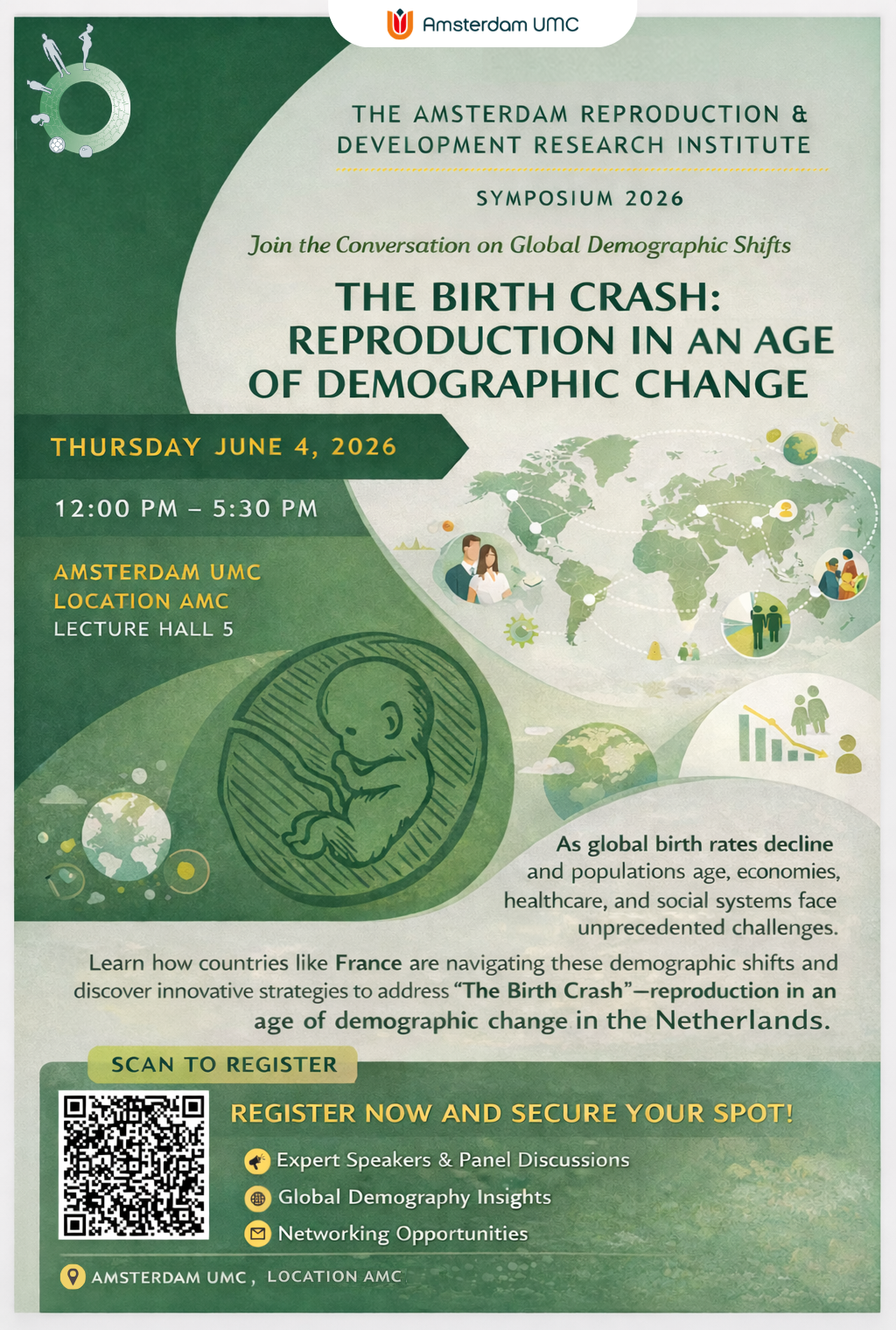
To tackle these pressing questions, Amsterdam Reproduction & Development is organizing its yearly symposium on June 4th, 2026. The event will bring together leading experts, policymakers, and researchers to discuss the complex challenges posed by demographic change and explore innovative solutions.
The symposium aims to move beyond narrow, siloed research questions and foster a broader, evidence-based conversation that informs public and policy debates on reproduction and demographic sustainability. As governments and societies grapple with these challenges, AR&D’s work is more critical than ever. By prioritizing research that addresses the interconnected issues of fertility, healthcare, and social policy, the symposium will provide a platform for meaningful discussions on how to ensure a balanced, sustainable future for all generations.