On 22 April, more than 60 participants gathered for the AR&D Mini-Symposium “Beyond Survival: Realising Future Fertility for Prepubertal Boys” — a day dedicated to scientific, clinical, and ethical advances in fertility preservation for boys facing gonadotoxic treatments. The programme featured a series of expert presentations throughout the morning, followed by an afternoon dedicated to academic discussion, thesis defence, and a farewell speech.
Morning Session – Scientific and Clinical Perspectives
The morning programme consisted of four speakers, each offering a unique perspective on fertility preservation research, patient care, and international collaboration.
Dr. Nina Neuhaus focused on the biological foundations of male fertility, emphasizing that spermatogonia are the basis of lifelong reproductive potential. In majority of the infertility cases, the causes remain unknown, which highlights the importance of understanding early testicular biology. Three major fertility restoration strategies were introduced, alongside research using single-cell RNA sequencing in neonatal monkey models to uncover cellular processes that extend beyond what can be observed through traditional histology.
Dr. Jillis van Maaren spoke that while fertility preservation through tissue cryopreservation is increasingly offered, restoration methods remain experimental. The session mainly focused on insights from interviews with childhood cancer survivors who participated in fertility preservation programmes, showing that most felt positive about having made the decision to preserve reproductive options.
Prof. Dr. Ellen Goossens highlighted recent clinical milestones in the field. Since 2023, approximately 3,000 patients worldwide have preserved testicular tissue, demonstrating growing implementation of fertility preservation programmes. The first human transplantation performed in 2023, was presented as a major step toward clinical application. Ongoing patient follow-up aims to determine whether sperm production can ultimately support assisted reproduction. Tissue grafting was described as one of the most promising restoration approaches currently under investigation.
Prof. Dr. Rod Mitchell emphasized the importance of international collaboration in protecting fertility potential. Updates were shared on the GROWSPERM consortium and OrchidNET, two initiatives designed to strengthen global partnerships, harmonize research efforts, and establish good-practice recommendations for fertility preservation programmes.
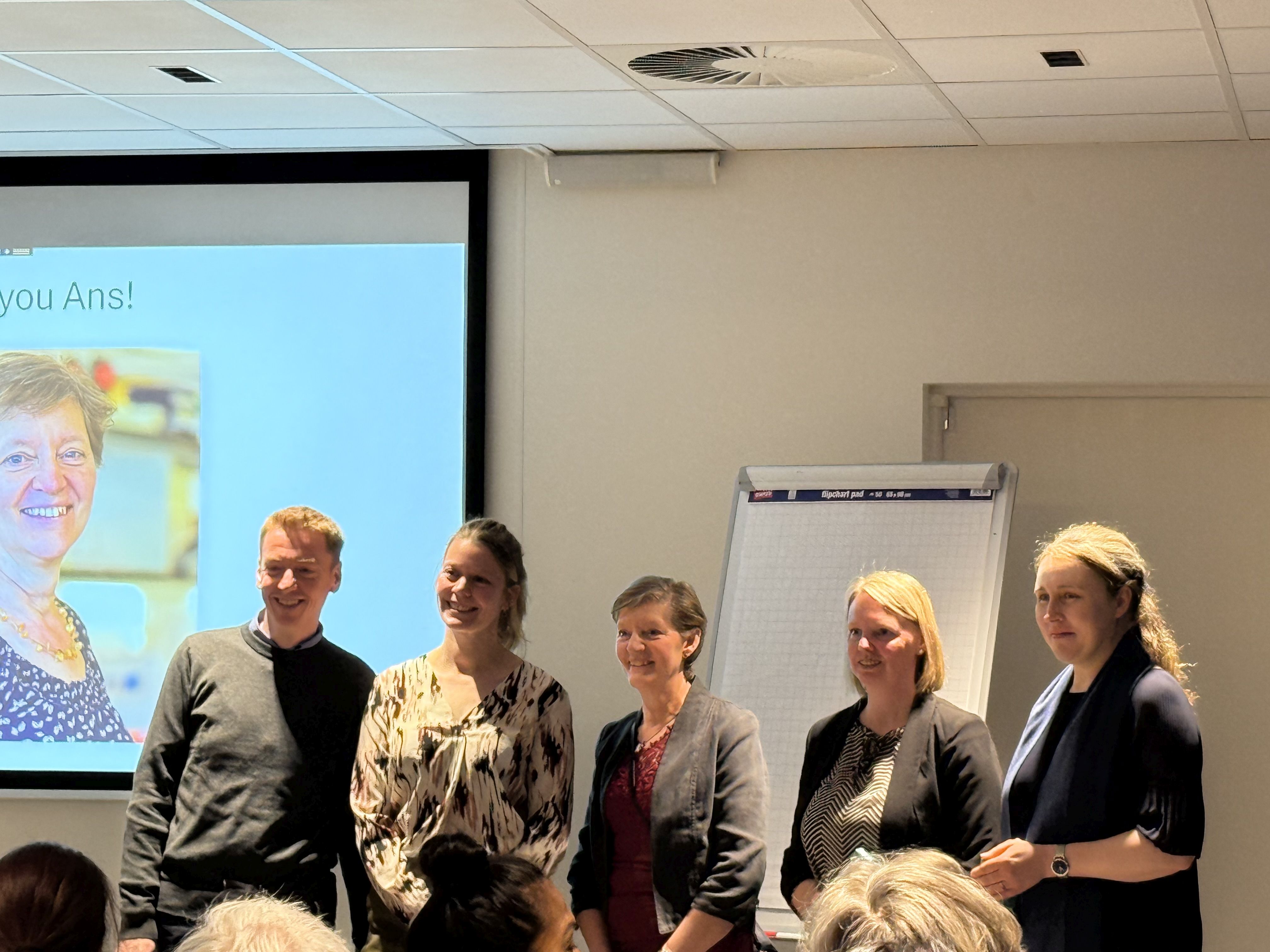 Keynote speakers (from left to right): Prof. Dr. Rod Mitchell, Dr. Jillis van Maaren, Prof. Dr. Ans van Pelt, Prof. Dr. Ellen Goossens, Prof. Dr. Nina Neuhaus
Afternoon Session – Academic Discussion and Reflection
The afternoon programme continued at the Oude Lutherse Kerk, where discussions expanded beyond scientific innovation to include broader clinical, ethical, and societal considerations surrounding fertility preservation.
A central highlight was the PhD defence of Ieva Masliukaite, whose thesis focused on fertility preservation in prepubertal boys. The defence prompted engaging discussion across clinical, biological, and ethical dimensions of the field, reflecting the interdisciplinary challenges involved in translating research into patient care.
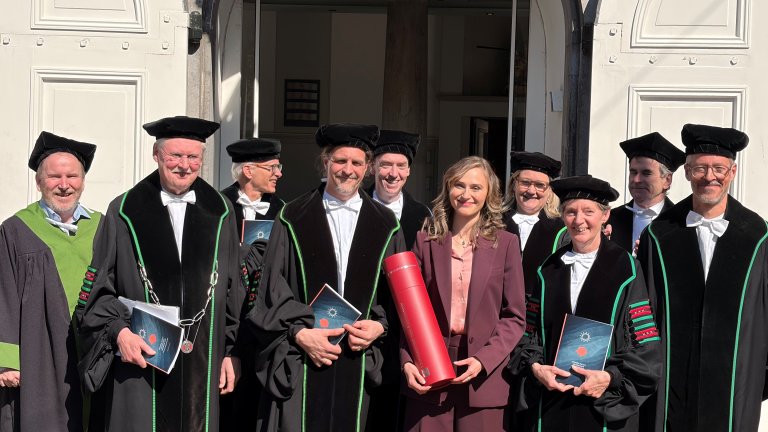
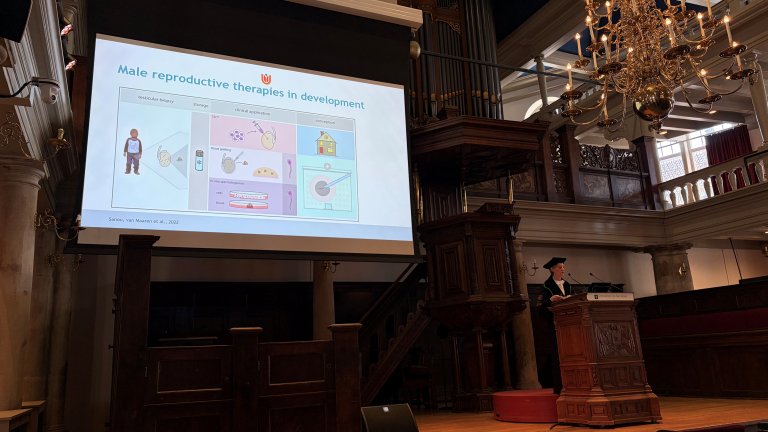
The day concluded with a farewell lecture by Prof. Ans van Pelt, titled “Freedom of Choice in Biological Parenthood Contributes to Quality of Life.” Her longstanding contributions to fertility preservation research, mentorship, and international collaboration were warmly recognized, celebrating her role in advancing the field toward clinical implementation.
The symposium closed with a networking reception, providing an opportunity for participants to continue discussions and strengthen collaborations across disciplines.
We thank all the keynote speakers who dedicated their time and presented at the symposium, as well as all the participants for showing up and engaging in meaningful discussions. We are looking forward to the next one!