


Immunotherapy has significantly improved outcomes for patients with advanced melanoma, but around half of patients still do not respond sufficiently. Researchers at Cancer Center Amsterdam are investigating a novel approach to improve those responses. In the new IMMUNIZE-MI study, they are testing whether deliberately inducing vitiligo can strengthen the immune response against melanoma. The study is led by principal investigators Rosalie Luiten, Dermatology, and Mariette Labots, Medical Oncology. Rosalie and PhD candidate Sophie Blinker explain the rationale behind the study and how a Cancer Center Amsterdam grant helped bring it into the clinic.
Vitiligo is an autoimmune condition in which the immune system targets melanocytes, the pigment-producing cells in the skin. These are also the cells from which melanoma originates. Previous studies have shown that melanoma patients who develop vitiligo during immunotherapy tend to have better outcomes, including longer periods of disease control and improved survival. For Rosalie, this observation raised an important question: could the immune response associated with vitiligo be actively harnessed to improve melanoma treatment?
“We are essentially turning a clinical observation into a therapeutic strategy,” she explains. “Vitiligo is usually considered an adverse event, but in melanoma it may also be a sign of a strong and relevant immune response. We want to know whether deliberately inducing that response can enhance the effect of existing immunotherapy.”
Priming the immune response
To induce this immune response, the researchers combine two topical treatments: monobenzone, which targets melanocytes, and imiquimod, which activates the local immune system. Together, the researchers refer to this approach as MI therapy. In an earlier study, MI therapy led to regression of melanoma skin metastases in a substantial proportion of patients. The new study takes this concept a step further by combining MI therapy with standard immunotherapy.
“We know from previous research that MI therapy can trigger an immune response against melanoma,” says Rosalie. “The idea now is to prime that response locally and then amplify it with systemic immunotherapy. Ultimately, we hope this will increase the proportion of patients who benefit from treatment.”
Patients apply the two creams to a defined area of skin for twelve weeks while simultaneously receiving standard immunotherapy. The study will assess the development of vitiligo, changes in circulating and local immune responses, and treatment-related toxicity.
As this is the first study to combine both approaches, the primary focus is on safety and dose optimization. At the same time, the researchers will look for early biological signals that the combination is indeed generating a stronger anti-tumor immune response.
Translational research in practice
The IMMUNIZE-MI study is a clear example of translational research, with observations from clinical practice feeding directly into laboratory research and, in turn, into a new therapeutic strategy. “We are not starting with a laboratory concept and simply testing whether it works in patients,” says Rosalie. “The starting point is something we observed in patients. We then investigated the underlying biology and are now bringing that knowledge back into the clinic.”
For Sophie, the study could also provide an important foundation for future clinical research. “We obviously hope to see patients who respond exceptionally well. If we see encouraging signals, that could justify a larger follow-up study designed to properly assess clinical efficacy.”
CCA grant enables first-in-patient step
The study is supported by a Cancer Center Amsterdam grant. According to Rosalie, funding is particularly crucial at this stage, when a promising scientific concept still needs to make the transition into an early clinical study.
“This CCA grant gives us the opportunity to take that first clinical step with the combination treatment. If the study produces promising results, they can provide the evidence needed to secure funding for a larger follow-up trial.”
The IMMUNIZE-MI study is now open at Amsterdam UMC, and the research team is ready to enroll its first patient.
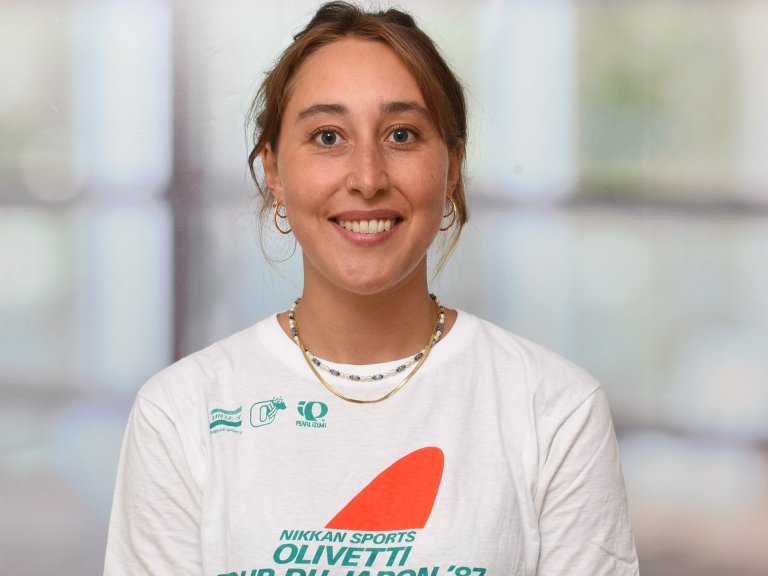
📷Sophie Blinker